Tokenization promises something very powerful: ownership that is transparent, trustless, and permanent.
Once an asset is recorded on a blockchain, it is not easily to change. This stability generates confidence. Buyers think that what they buy is secured by code, and not by middlemen.
But consider this situation. A tokenized real estate NFT is sold to a new buyer. Later, it was found that the seller committed fraud and did not have any legal right to transfer the property. The blockchain displays a completed transaction. In this case, the court states the sale is invalid. Now what?
Here lies the core tension. Blockchain systems are designed to be irreversible. Real-life legal systems are not. Courts may void contracts, undo transfers, and reclaim ownership.
So what happens if tokenized assets need to be reversed? Let’s discover the legal conflicts, technical barriers, governance problems, and potential solutions that arise when digital permanence meets real-world accountability.
What are Tokenized Assets?
Tokenized assets are real-world or digital assets that exist as tokens on a blockchain. These tokens serve as proof of ownership. Instead of having a paper certificate or being stored on a traditional database, ownership is recorded digitally and can be transferred by using blockchain technology.
Many types of assets can be tokenized. Examples are real estate properties, company stocks, artwork, government bonds, and commodities such as gold or oil. Each token represents some type of full or partial ownership of the underlying asset. This enables assets that were previously not easily bought and sold to be easily bought and sold.
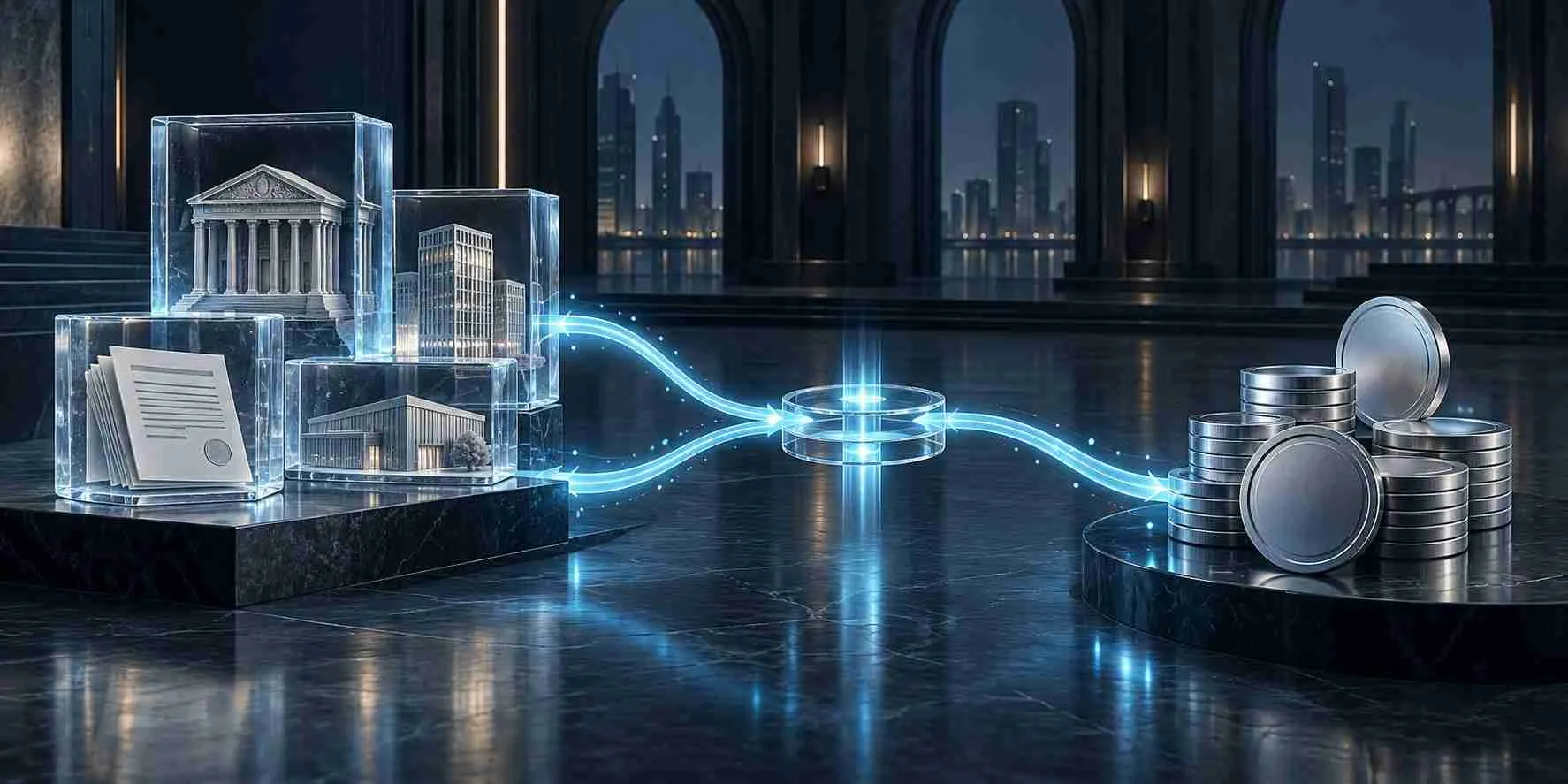
Tokenization is about linking an off-chain asset through an on-chain token. The blockchain is used to show who owns the token, and the token is linked to the real-world item by a legal agreement. This forms a bridge between digital records and physical ownership.
The benefits are quite significant. Tokenization helps in liquidity by enabling faster trading. It allows fractional ownership, which means that users can purchase small parts of expensive assets. It also makes it more accessible to the point that it enables worldwide participation. As a result, tokenization is growing rapidly in the finance, real estate, and investment markets.
The Promise of Immutability
- Blockchain’s Irreversible Ledger
Blockchain technology is based on the concept of an irreversible ledger. Once a transaction is recorded, it cannot easily be changed or deleted. Every transaction becomes part of a permanent history that is shared between many other computers. This makes the system secure as no person or authority can change ownership records secretly.
- “Code is law” Philosophy
This results in a popular philosophy in crypto known as “code is law.” This idea means that the rules and the smart contracts of the blockchain define what is valid. If the transaction is in line with the code, then it is final. There is no need for a central authority to approve, reverse, or correct it.
- Why Immutability Builds Trust
Immutability helps in building trust because users know that the system is not easily manipulated. They do not need to rely on banks, governments, or intermediaries to secure their ownership. The blockchain itself becomes the source of the truth.
- Why Reversals Contradict Crypto Principles
Since, this same strength leads to a problem. In case a mistake, fraud, or theft occurs, it becomes extremely difficult to reverse. Reversals work against the fundamental crypto principle of permanence, which causes tension between technical certainty and real-world fairness.

Real-World Assets Follow Real-World Law
- Legal Ownership Exists Outside Blockchain
Tokenized assets may exist on a blockchain, but real-world law still defines the true legal ownership of an asset. In this case, a token for real estate is not a substitute for the legal title to property. Courts and legal systems recognize ownership on the basis of official documents, contracts, and regulations. The blockchain shows as a record, but it does not completely replace legal authority.
- Courts Can Override Digital Records
Courts are power to override digital ownership when there is a need for it. If a judge finds that a transaction was invalid because of fraud, coercion, or mistake, he or she can order the asset to be returned. Even if the blockchain records a different owner, the legal systems can impose their will by applying legal penalties, seizing assets, or other enforcement measures.
- Fraud, Theft, and Mistaken Transfers
Fraud, theft, and accidental transfers are some of the risks common in traditional and digital systems. If someone manages to get access to a private key and moves a tokenized asset in an illegal way, the blockchain still registers this as legal. Since the legal system may recognize the original owner as the rightful owner, and try to rectify the situation.
- Legal Systems Demand Reversibility
Legal systems are aimed at rectifying errors and to defend victims. They provide for reversals, refunds, and dispute resolution in order to ensure fairness. This presents a direct conflict with the concept of blockchain systems, in which transactions are made permanent and irreversible.
- Conflict between Law and Smart Contracts
This raises a fundamental tension between the legal authority and the code of the blockchain. Smart contracts carry out automatically, without taking in account the legal disputes. But the real world of law can still intervene so that the gap between technical ownership and legal ownership that tokenization must eventually solve arises.
When Reversal Becomes Necessary
A) Fraud and Theft
- Hacked Wallets
One of the most common causes for reversal is a hack on the wallet. An attacker can move tokenized assets without authorization if they are able to get a user’s private keys. While the transfer was not authorized, the blockchain considers the transaction as legal. Even if the original owner did nothing wrong, they lose control.
- Unauthorized Transfers
Unauthorized transfers can also happen through scams, phishing, or through malicious software. Users can unknowingly approve transactions, giving attackers control over their assets. Once these transfers have been completed, they cannot be reversed, even technically, if they were clearly fraudulent. This leads to serious problems when tokenized real-world assets are involved.
B) Mistaken Transactions
- Sending to Wrong Address
Human error is another major factor in causing. Users are likely to accidentally send tokenized assets to the wrong address. Since the addresses of blockchains are long and complex, even a tiny error can cause permanent loss. There is generally no built-in recovery process.
- Contract Errors
Smart contract bugs or incorrect settings can also result in unwanted transfers. If the contract is executed in the incorrect way, assets can be transferred to the wrong party. Fixing these errors is not easy once transactions are confirmed.
C) Regulatory Orders
- Court Freezes
Courts may order assets to be frozen in the course of legal disputes. This is common with fraud investigations or conflicts of ownership. However, such orders may be difficult to apply in blockchain systems.
- Sanctions Compliance
Governments can require the freezing of assets linked with the sanctioned people or organizations. Tokenized asset platforms must follow, despite any efforts in blockchain systems to prevent intervention.
D) Disputed Ownership
- Bankruptcy Cases
During bankruptcy, courts determine the disposition of assets between creditors. Tokenized assets might be reversed or reassigned according to the legal rulings.
- Asset Seizure Disputes
Authorities are allowed to seize assets related to illegal activities. Even if it is possible to have ownership on blockchain, it can be overruled by legal systems to apply the law.
Technical Barriers to Reversal
- Irreversible Transactions by Design
Blockchain systems are designed to make transactions permanent. Once a tokenized asset transfer is confirmed and added to the ledger, it cannot be easily changed or deleted. This is the immutability that protects the ownership records and involves no tampering. Since, it also means that mistakes, fraud, or unauthorized transfers are not reversible through normal technical processes.
- No Central Authority
Unlike banks, there is no central authority in decentralized blockchain systems that can reverse transactions. There is no single organization that has the power to cancel or correct transfers. This design allows for increased security and independence, but removes the ability to fix problems quickly in the case that something goes wrong.
- Smart Contracts Lack Undo Functions
Smart contracts are automated contracts that execute instructions upon conditions being met. Once they run, their actions are final. Most smart contracts lack the built-in undo or recovery functions. This makes it very difficult to reverse tokenized asset transfers even if errors are discovered later.
- Forks as Extreme Measures
In rare cases, forks can be used by blockchain networks to reverse major incidents. A fork is a creation of a new version of the blockchain that excludes certain transactions. However, forks are controversial, complex, and not used very often.
- Why Reversal is Technically Difficult
It is these technical limitations that make reversal so difficult. Blockchain systems favour permanence, which serves to protect trust at the cost of flexibility when corrections are required.
Centralized vs Decentralized Tokenization Models
- Centralized Issuers Can Freeze Tokens
In centralized tokenization models, a company or issuer is in control of the token contract. This control often includes the ability to freeze accounts, hold transfers, or even change the token assigned. If there are cases of fraud or lawsuits, the issuer can take immediate action. This makes the reversals possible, but it also means users have to trust the authority of the issuer.
- Permissioned Blockchains
Some of the tokenized assets are permissioned blockchains. These networks have restrictions on participation and are controlled by known entities. Since control of governance is in place, it is easier to reverse or correct transactions. Legal compliance is also easier, as the network can follow court orders or regulatory demands.
- Fully Decentralized Tokens
In contrast, fully decentralized token systems remove any centralized control. No individual party can freeze or undo transactions. While this protects against censorship resistance and is in alignment with the principles of crypto, this renders error correction nearly impossible.
- Trade-Offs and Practicality
There is a clear compromise between flexibility and purity. Centralized systems allow reversibility at the expense of decentralization. Fully decentralized systems have the benefit of preserving immutability, but the disadvantage of making it very difficult to limit legal enforcement. For real world assets, where legal ownership is important, controlled or hybrid models might prove more practical.
Governance Mechanisms and Emergency Controls
- Admin Keys
Admin keys are used by certain tokenized asset systems to enable authorized users to stop, modify, or freeze token balances. In the case of fraud or legal challenges, this allows for emergency intervention, but it also encourages confidence in centralized authority.
- Multisig Governance
Multiple parties must approve multi-signature governance before important decisions are made. This promotes mutual responsibility for reversals or freezes and limits misuse by a single party.
- Upgradeable Smart Contracts
Developers can add recovery features or correct errors with upgradeable contracts. While this flexibility helps in error correction, it challenges the concept of permanent, unchangeable code.
- DAO Voting and Governance Risks
DAO voting is used by some systems to authorize reversals. Decentralized governance is open to misuse by influential voters, raising the possibility of unfair or politically motivated disturbance.

Legal Enforcement vs On Chain Finality
During legal disputes, courts have the authority to order the freezing or transfer of tokenized assets. Usually, custodians, platforms, or intermediaries that regulate access carry out action.
Because laws are local and blockchains are worldwide, authority causes issues. As a result, there is an ongoing dispute between the certainty of blockchain technology and existing legal authority structures in every country.
Designing Reversible Token Systems
Reversible token systems can include built-in compliance layers that will allow freezing when legally required. Conditional transfers can postpone final settlement until checks have been made.
Time-locked transactions start review periods. Arbitration frameworks deal with disputes. Hybrid models are a combination of legal contracts and smart contracts to balance accountability and smart contract efficiency.
Future Outlook – Immutability vs Accountability
As institutions adopt tokenized assets, there will be increased pressure from the regulatory side. Due to regulation, pure immutability may lose its practicality in regulated markets. Systems will likely evolve to include some controlled reversibility for fraud and legal compliance.
The future lies in striking the right balance between decentralization and accountability, between safeties and reducing all trust and efficiency that blockchain offers.
Conclusion
Blockchain technology is not capable of overriding the legal systems of real-world ownership. When disputes, fraud, or court orders arise, reversals are unavoidable.
The future of tokenization is a question of how to design systems that balance the technical finality and the legal fairness. Ultimately, tokenized assets acting as proxies for real-world value will always play a decisive role in a legal authority.