
The majority of people believe that audited is a word that means safe, tested, and risk-free.
That is a dangerous belief in crypto. Even with a badge of auditing, there are several smart contracts that have lost millions of dollars in minutes. It is an ugly reality that must be mentioned.
One of the most famous crypto projects had successfully passed an audit, came out, and was hacked within weeks. Users also believed in the audit label and were safe. The outcome was frozen finances, panic, and broken trust.
That is the key question: in case a smart contract is audited, why is it still failing?
The answer is simple. Audits are good assistants, but they do not make it safe. They are not a magic shield that ensures the protection of code against all errors, tricks, or risks in the future. It is a common misconception what an audit really checks and what it does not.
Let’s explore and discover the true meaning of smart contract audit, its common omissions, the implications of audit being called safe, and what developers and users can do to be more informed.
What Are Smart Contracts and What is an Audit?
Smart contracts are small programs that operate on a blockchain. They follow regular rules that are in code and labor without a middleman. After becoming live, they automatically transfer funds or data based on some conditions being satisfied. This renders them quick and efficient, yet a dangerous mistake in case of errors in the code.
Auditing of a smart contract is a review of this code. An audit team reads the contract line by line, tests, and searches for known security problems. Once this is done, they post a report that lists issues that were identified and gives solutions. There are petty problems and serious ones.
Projects proudly advertise “audited” because it builds trust. To the user and investors an audit is a safety check. It creates an impression that professionals have already verified that everything is safe and that the code is secure.
Since an audit is not an indication that the contract is perfect. It only states that the code was checked at some point in time during the span. This difference is highly relevant to a person who uses or invests in crypto projects.
The Marketing of “Audited” and Why It Feels Safe
Audited is a term that is used everywhere in crypto marketing. It appears on project sites, token pages, launch pages, and social media advertisements. It is usually used side by side with such words as secure, trusted, or verified. This is an immediate confidence building to most.
- Credibility Effect on Investors
When they find audited, investors want to believe that they have been properly checked and approved by professionals. This reduces the fear, and individuals become comfortable investing money. New users, especially beginners, see audits as a green signal to trust the project without asking more questions.
This is a good effect known to projects. An audit badge may raise the level of attention, attract funds, and make a launch seem professional. Since the trust is usually founded on emotion, rather than a complete understanding.
- One-line Warning
This is the main caution to keep in mind: excellent marketing does not equal perfect security. An audit is a tool, not a promise that nothing can ever go wrong.
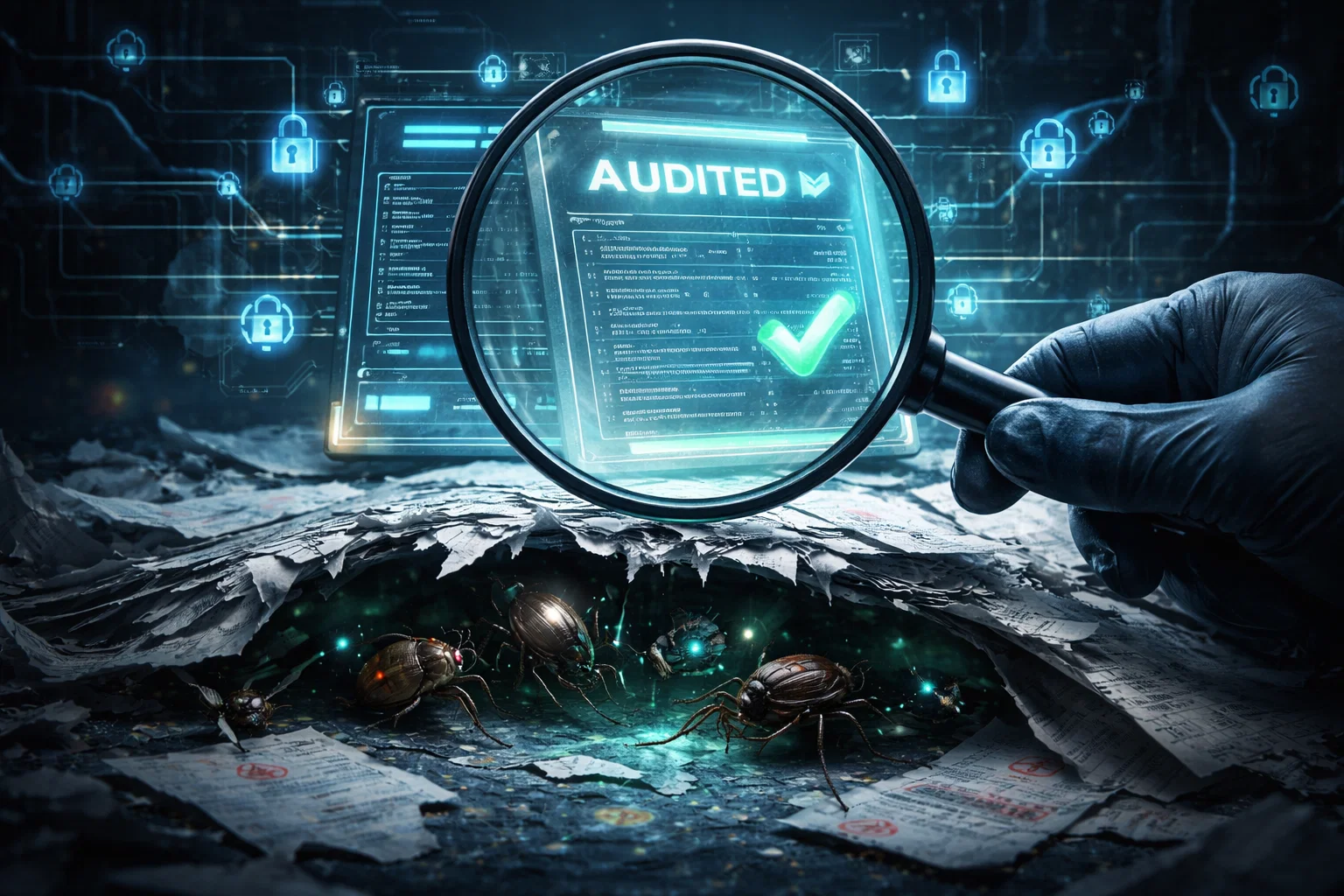
The Dirty Secret: What Audits Often Miss
- Limited Time, Scope, and Human Limits
Audits are performed under time pressure. Code is viewed by auditors in a specific amount of time and within a defined scope. This means that they do not look into everything surrounding but that which is included in it. They also deal with assumptions about the use of the contract. Auditors, like any other humans, can miss things. Even with the careful review, a tiny error of logic is capable of being overlooked.
- What Audits Usually Do Not Check
The majority of audits are centered on code bugs, and not the actual money flow in the real world. The audit is usually not about economic design, user behavior, and incentive tricks. The scenario of how a contract responds to the other contracts or other systems is also hardly tested by audits. Upgrades, administrator controls, and modifications of governance in the future are not normally deeply reviewed.
- Safe in Tests, Risky in Real Use
A contract may perform well on tests but fail in the real world. The experiments were carried out in clean and controlled conditions. The behavior of real users is not predictable. Attackers search for edge cases that are not addressed during normal testing. This gap might create a huge loss due to the minor setback when the money is actually involved.
- How Issues Slip Through
Imagine a contract that allows users to withdraw funds. Withdrawals work fine in the test. However, in an uncommon timing situation, a customer has the option to make two withdrawals before balances are updated. This situation is what may not be visible in simple testing, but attackers actively search for such gaps.
- A Simple Analogy
Imagine a smart contract of audit as a house that has been inspected. The building has a strong appearance, and the rooms are good. Since, there might still be faulty hidden wires within the walls. The check minimizes risk, but it does not ensure that nothing will go wrong.
Common Audit Blind Spots
- Role-Based Access and Multisig Issues
The auditors can ensure the existence of roles, but not entirely test the application of these roles in real situations. When the power of the administration is excessively large or controlled improperly, it is possible to cause many harmful results with a single error.
- Economic Design and Tokenomics Loopholes
Audits typically concentrate on code safety, and not on how people may game the system. A contract may be written correctly, but still may make unjustified profit or waste value with clever timing or conduct.
- Dependencies and Upgradeability Risks
There are a lot of contracts that are based on external libraries or other contracts. Problems may manifest even in case those change or fail in the future, even when the main contract was audited.
- Test Coverage and Environment Mismatch
Tests are conducted under controlled conditions that are not necessarily the same as the actual blockchain conditions. Issues that were not identified during tests may be exposed by network delays, high traffic, or abnormal user behavior.
- Social and Operational Risks
The code is not concerned with the actual private keys, deployment steps, or manually performed activities. Audits cannot ensure 100 percent protection against human errors, dropped keys, or loose deployment methods.

Real-World Fallout: When “Audited” Contracts Fail
1. In case of a failed audited smart contract, the damage spreads quickly. In moments, the money is gone, and users get shocked and powerless. There are cases where the tokens may become stuck with the contract, such that they cannot be transferred or sold. The financial loss is usually irreversible, even if the problem is fixed later.
2. To the users, it means loss of savings and trust. A large number of people join crypto, thinking that audits ensure the safety of projects. As long as that belief is shattered, they can exit the space completely. Small investors are the ones who tend to lose the most, as they are not able to recover a loss so easily.
3. The harm does not stop there. Stopping trading is done to safeguard users, leading to the fall of prices and panic selling. The money is drained, and the token of the project can lose the majority of its value in several hours. What initially appeared to be a good launch might easily become a crisis.
4. There are also serious consequences for developers. It is very difficult to rebuild trust once failure has taken place. Even honest teams might have a hard time explaining the cause of what went wrong. Successive collaborations, investments, and social sponsorships can vanish in a span of a night.
5. The losses in most cases reach into millions of dollars. It is user funds in some cases; it is locked value in some other cases, and long-term reputation damage in other cases. There may also be an audit report in place, of which the blow cannot be reversed. This is the reason as to why we have to know the boundaries of audits before we can fully rely on them.
Why Audits Still Matter
A) Audits Add Real Value
Smart contract audit is an important aspect of crypto security. They help in the detection of general bugs, logic errors, and unsafe patterns before a project is launched. Audits push the developers to write better code and follow to superior standards. A notable number of serious issues are only revealed due to an audit conducted.
B) Audits Are Only One Layer of Defense
An audit is not sufficient to ensure safety. It is only one of the layers of a bigger security system. In order to achieve good operations, other layers such as strong testing, considerate upgrades, monitoring, and good operations are also important. Trusting an audit alone will give a false impression that one is safe.
C) Respect Auditors but Stay Cautious
A majority of the auditors are honest and operate within an appropriate time and scope. They are not saying they are perfect. The actual error occurs when the users take an audit as a guarantee. One should have the right outlook of admiring audit work without forgetting to be alert and updated always.
How to Evaluate an Audit: A Simple Checklist
- Who Audited the Contract?
Look at the name of the audit firm and its previous work. A well-known company providing public reports is even more trustworthy. There should be a direct connection with the audit report, always, and not only a logo.
- When Was the Audit Done?
Audit timing matters. In case the audit is not recent, the code might have been modified. An audit that has been conducted recently will most likely be more reliable than the one conducted many months ago.
- What Was the Audit Scope?
View what auditors really analyzed. Other audits are not system-wide audits, as some are limited to a single contract. The small scope means that there are still certain risks.
- What Testing Methods Were Used?
Good audits describe the manner in which the code was tested. Find references to various tests, stress testing, or more intensive review methods. Better coverage is normally a result of more testing.
- Were Issues Fixed and Rechecked?
Does the project resolve the issues that were reported? The follow-up or re-audit indicates to the team that it took the findings seriously.
- Is the Report Clear and Open?
An excellent audit report is simple to understand and clear. Avoid those projects that hide reports or provide general overviews.
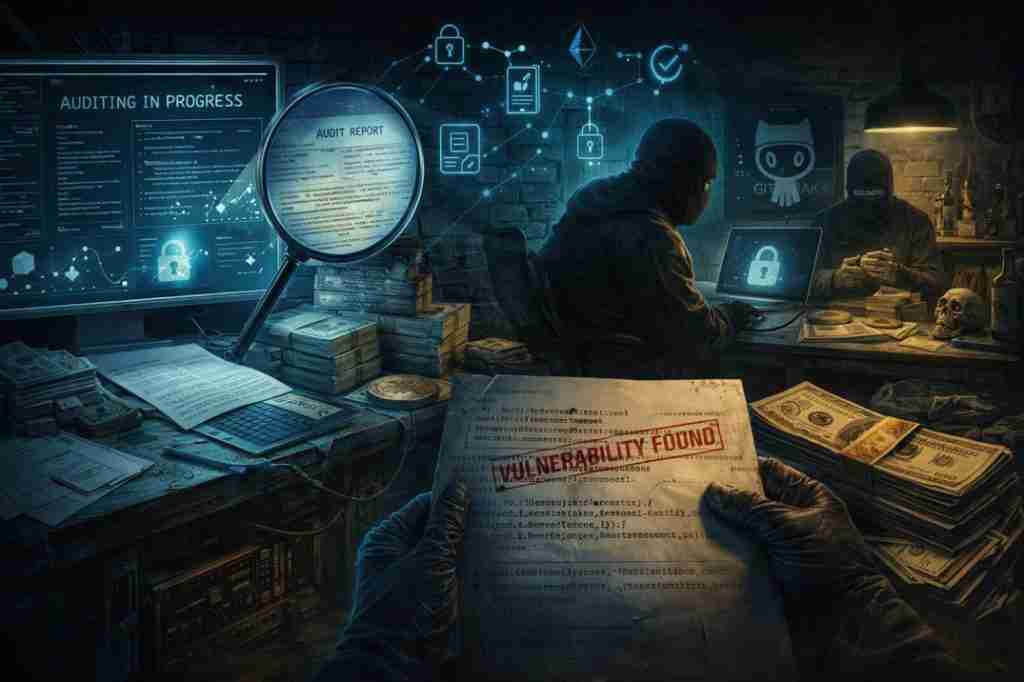
What Developers Should Do Beyond an Audit?
- Do deep testing before release and continue monitoring contracts after release. Pay attention to abnormal activity and take action.
- Do provide bug bounties to invite outside review. Do not launch everything at once; release gradually.
- Do restrict admin powers. Single-point failures can be minimized by using multisig wallets and timelocks.
- Do maintain upgrade paths in a tidy, safe, and documented fashion. Ensure all the changes are easy to follow and overview.
What Users and Investors Should Do?
Do not rely on the word “audited”. An audit is beneficial, but not all the risk is removed. These are the questions to ask whenever the audit is conducted, and what aspects of the project were covered. Explore the truthfulness of the team and see what actually goes on-chain.
Use little amounts, particularly at the start. Risk can be reduced by waiting until it has become more widely adopted. Take advice on what to do and the long-term community voices, rather than hype on social media.
Quick Do and Don’t List
- Please read the audit reports carefully.
- Do stay patient and alert.
- Take your time due to marketing.
- Do not invest money that you cannot afford to lose.
Conclusion
Smart contract audits are helpful, but they are not a promise of safety. Real security comes from awareness, careful checks, and smart behavior from both developers and users.
Stay curious, stay cautious, and never trust a single label. Share this quick checklist, ask questions, and always think before you trust.