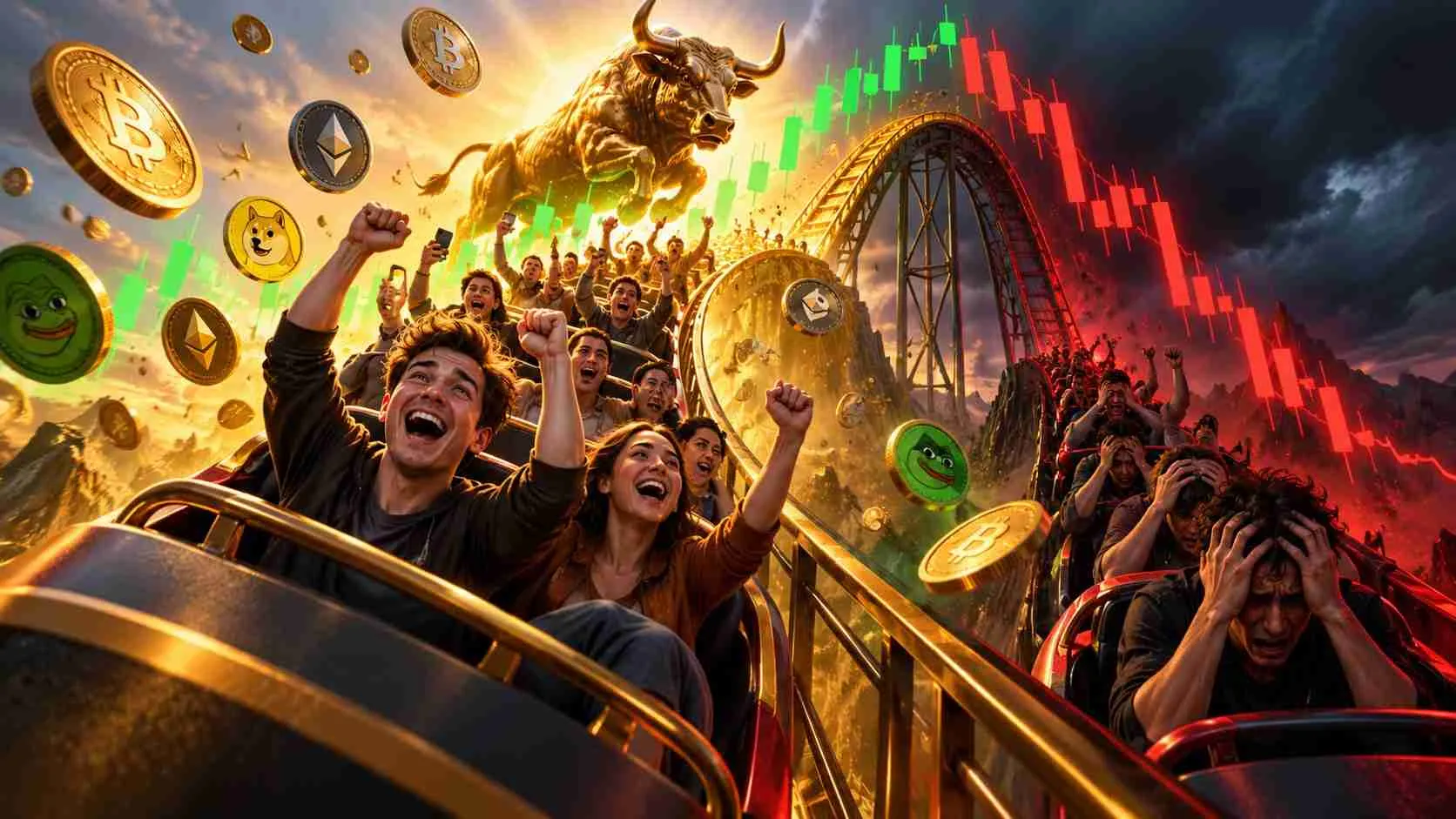
Crypto has always carried a strange kind of promise. It promises the dream of massive amounts of wealth, financial independence, and the thrill of getting in before the rest come to grid. And that dream is so strong because, in some cases, it has been pure reality. Wealth has been created from small sums into huge fortunes. Those sorts of stories spread like fire, and they make the market feel ripe with potential.
But there is another side to crypto that does not get nearly as much attention.
Every time someone makes a profit, others end up losing far more than they ever anticipated. Some lose through bad trades. Some lose because they trust the wrong project. Some lose because they take risks they do not fully understand. And in the worst cases, people lose their entire savings in just a single day. Not slowly. Not over months. In 24 hours.
This is what makes crypto such a risk to inexperienced investors. It is a fast-moving market with tension at breaking point and no kindness for the unwary. One person can have spent years saving and then watch it vanish from poor timing, excessive leverage, scams, or ignorance of the most simple risk. What appears as an opportunity at first will begin to become a financial sinkhole in less than 24 hours.
To be honest, crypto tests not only your ability to identify profit opportunities. It challenges your discipline, tests your patience, and makes you realize just how fast money can go when greed takes control.
The Emotional Trap: FOMO, Panic, and Bad Timing
Most people who lose money in crypto do not begin with the intention of making reckless decisions. They begin with excitement.
They see a coin rising fast, like many readers chasing crypto pumps. They hear friends talking about it. They watch social media fill up with screenshots of profits. Someone says the market is “about to explode,” and suddenly the fear of missing out starts creeping in. This is how FOMO works. It is not just a feeling. It is a force that compels individuals to do something prior to preparing for it.
Once FOMO takes over, logic starts getting weaker. Someone who wanted to do careful research probably ends up buying in a hurry since they didn’t want to be 0ld one left behind. They rationalize that they are being intelligent for racing ahead. In reality, they come in at the worst possible time.
That is where bad timing begins.
In crypto, price movement is everything. If you enter after a huge run-up, you may be buying from people who are already ready to sell. The public sees the green candles and assumes the trend will continue. What they do not see is that early buyers may already be taking profits behind the scenes. By the time the average investor notices the coin, the easy money may already be gone.
Then comes panic.
And, when it does eventually start to crumble, the atmosphere shifts rapidly. One person felt confident an hour ago, but now they are nearly thrown up from watching the price bob up and down. They stare at the chart, hoping it will bounce back. Then it falls again. Now they find themselves, never mind the long-term. They are thinking about survival. Panic selling begins.
That emotional cycle is brutal. The reason? People buy when everyone else is excited and sell when everyone else is afraid. They become trapped between two bad instincts. If they buy too late, they get stuck near the top. If they sell too fast, they lock in losses. If they hold too long, they watch their gains disappear. Either way, emotions are making the decisions instead of judgment.
The alarming thing is how quickly this destructive cycle can unfold. In a traditional market, the emotional damage might unfold over weeks. In crypto, it can happen in hours. A coin can go from “everyone is rich” to “everyone is panic selling” before the day ends.
This is why so many people lose money so quickly. They are not simply responding to numbers. They base their reaction on fear, greed, and sociopsychological pressure. And in crypto, those emotions are expensive.

When Leverage Turns a Small Drop Into a Total Disaster
If emotion is one of the biggest problems in crypto, leverage is one of the most dangerous.
Leverage sounds exciting when people first hear about it. It allows traders to borrow money and open larger positions than their capital would normally allow. To someone looking for fast profits, this feels powerful. A small market move in the right direction can create a large return. That is the attraction.
But leverage has a dark side that many beginners underestimate.
Just as easily as it boosts profits, it can inflict losses with equal ease. And because crypto is already highly volatile, leverage can turn a normal dip into a complete wipeout. A move that would be annoying in a regular spot trade can become catastrophic when borrowed money is involved, especially when investors ignore why slippage can hurt more than gas fees.
This is how a small drop becomes a total disaster.
An individual might open a heavily leveraged trade, fully convinced that the market will move in their favor. But crypto does not care about confidence. If the price moves slightly against them, the trade can start losing value quickly. If the margin becomes too weak, the exchange may automatically close the position. That is liquidation. Put in simple enough terms, the reasoning is that the trade is dead, and the money supporting said trade died with it.
Liquidation feels like a shock to new traders; it usually occurs very quickly. They may think they still have time to recover or adjust the position. In reality, the market may already have moved far enough to end the trade completely. The loss is not just painful. It can be total.
The danger is not only the trade itself. It is what happens after the trade fails.
A liquidated person is usually ashamed, mad, and looking for revenge. Instead of getting the joke, they probably will try again right away. They use more leverage, bigger size, and even less patience. The logic becomes emotional: “I just need one winning trade to get it back.” That mindset is where many accounts collapse completely.
Leverage does not just create financial risk. It creates psychological pressure. Every small price move feels personal. Every candle on the chart becomes a threat. The trader no longer has room to think clearly because the position is too large for the size of their account and their emotional tolerance.
In a fast market like crypto, that is a dangerous combination. A small drop should be manageable. But when leverage is involved, it becomes a trigger for disaster. That is how people can lose huge amounts of money in a matter of hours without ever fully understanding how the trade went wrong.
Fake Hype, Rug Pulls, and Projects Built to Collapse
Not every crypto loss comes from trading. Some losses come from trust.
One of the harshest realities in the crypto world is that not every project is built to last. Some are built to attract attention, collect money, and collapse. They may look professional on the surface. The website may be polished. The branding may be strong. The community may be loud. The social media hype may be everywhere.
But underneath all that noise, the project may be hollow.
This is where rug pulls become so dangerous. What is a rug pull? A rug pull is when an insider or developer markets the token, lures greedy investors, and then either dumps their position or removes liquidity from the market. Only for it to collapse, the price tanks, and normal buyers are just left holding useless tokens.
That is what makes these collapses so severe: the speed at which they occur. A project can be dead on its feet in the morning and basically on life support come nighttime. People who bought in because they thought they were early often discover they were actually the last ones in.
The emotional manipulation behind these projects is often very effective. The creators know how to build urgency, and that pressure is part of the exit liquidity problem new investors rarely see coming. They use phrases like “early access,” “next big thing,” “community-driven,” and “limited opportunity.” These words create pressure. They make people feel as if waiting is dangerous and buying now is smart. That is exactly how the trap works.
What makes it worse is that fake hype does not always look fake. Some projects are not obvious scams. They may have real developers, real marketing, and even a real product idea. But the token economics may still be weak. The supply may be concentrated in a few hands. The liquidity may be fragile. The value may depend almost entirely on new buyers arriving later to keep the price up.
That means the project can be built to collapse even if it does not collapse immediately.
A token with no strong foundation can rise quickly on enthusiasm alone. However, enthusiasm does not last forever. When the buzz subsides, the market often realizes that, in reality, there aren’t that many buyers willing to pay such a high price. The chart falls, and the people who entered late absorb the loss.
For beginners, the lesson is painful but important: attention is not the same as value. A project can be popular and still be unsafe. It can be viral and still be empty. It can look like an opportunity and still be a trap.
In crypto, fake hype can destroy life savings because it sells hope faster than people can think.

Why New Investors Ignore Risk Until It Is Too Late
The last reason people lose everything so quickly is that they do not take risks seriously enough.
This happens all the time with new investors. They enter crypto during a bullish period when prices are rising, and social media is full of success stories. At that moment, risk feels distant. It is easy to believe that the market is moving in one direction forever. It is easy to think that careful investors are simply missing out.
But that confidence can be misleading.
Many beginners assume that if a coin is trending, it must be safe enough. They trust popularity more than research. They assume a large community means a healthy project. They think that if enough people are talking about it, someone must have checked the basics already. That kind of thinking can be costly.
Risk is often ignored because it does not feel urgent until it is too late; regulators like the FTC warn consumers about crypto scams for the same reason. A person may know, in theory, that crypto is volatile. They may even repeat that fact to others. But knowing that a risk exists is not the same as respecting it. It is one thing to say a market is dangerous. It is another thing to size a trade correctly, avoid leverage, check token supply, question liquidity, and refuse to chase a coin just because it is pumping.
That gap between knowledge and behavior is where many losses begin.
New investors also struggle because they often confuse speed with intelligence. If a token is moving quickly, they feel pressure to move quickly too. They fear research could cost them the opportunity.
A lot of people also enter crypto with emotional money. That means they’re deploying capital that they can ill afford to lose; therefore, every price move feels far larger than it actually is. The pressure of accumulating losses rapidly can lead them to make decisions that are even more misguided. They just start panicking, doubling down, or pumped or hold chasing because they can’t face the fact that their thesis was wrong.
Risk management sucks, The Wolf of Wall Street is awesome, but only risk management is going to keep you alive in these volatile times.
This refers to avoiding the risk of committing too much capital to any single trade. It means understanding liquidity before buying. It means avoiding leverage unless you truly know the risk. It means accepting that missing one opportunity is better than losing everything.
New investors often ignore these lessons because they are focused on the dream of fast growth. But crypto does not reward wishful thinking. It rewards discipline, patience, and the ability to walk away from dangerous setups.
Conclusion
It is a market of speed, emotion, and deception intertwined with high levels of risk that 99% of novices simply are not equipped to handle, and so, when the chips are down. When the market suddenly turns downward, people can lose their entire life savings in crypto within just 24 hours. FOMO causes them to buy at the wrong time. Panic pushes them to sell at the worst time. Leverage turns small price changes into account-ending losses. Anyone could be sucked into fake hype, or rug pulls, and then what? The projects were never built for your protection. And the unwillingness to treat risk like children means they are vulnerable until it is too late.
The introduction to crypto often feels exciting because it shows the upside. But the subtopics here reveal the reality that many new investors learn too late. This market not only rewards boldness. It punishes carelessness. It does not just test how much profit you can make. It tests whether you can protect what you already have.
That is the real lesson. Crypto can make opportunity, but if people take a shortcut, it can destroy financial security very quickly. Investors who remain will almost always be those who do not overtrade on fickle ups and downs. They slow down, they ask the hard questions, and honor loss before it occurs.
Ultimately, the difference between wealth building and self-destructive behaviour could be boiled down to a single line: Let excitement make your decisions or let discipline do it.