Since blockchain has been found to be secure as well as transparent there is some kind of challenges that it encounter. One big disadvantage that can be recommending is the problem of privacy as the transactions are public; the data can turn out to be disclosed. Zero-Knowledge Proofs (ZKPs) provide the answer to the above issues — and increasingly power scaling solutions, as seen in zkEVM crypto gaming.
A Zero-Knowledge Proofs permit someone to reveal that they know few information without communicating such details.
In blockchain, makers can leverage Zero-Knowledge Proofs to ensure that the transactions that are conducted are valid without leaking such information to the public — a scalability-and-privacy goal shared by research-driven chains like Cardano.
This also helps in modifying the system’s scalability by increasing the rate of the transaction to be more efficient.
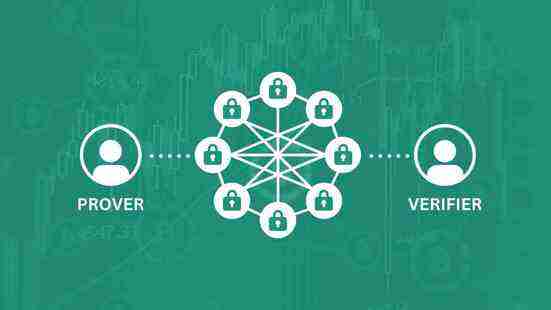
Zero-Knowledge Proofs (ZKPs)
What Are Zero-Knowledge Proofs?
Zero-Knowledge Proofs are a way for prover (referred to as someone) to prove to verifier (to another person) that they understand something without disclosing what are the records.
For such case, consider you want to show that you know a password without announcing the password itself.
The verifier may be sure that you know the password however they may not learn what it is far. This makes ZKPs beneficial for keeping information private. For a deeper technical primer, see Ethereum’s ZKP overview.
Historical Background
ZKPs had been first brought within the 1980s by using researchers within the discipline of cryptography (the science of securing information).
The intention changed into to create a way that lets in peoples to show they have positive expertise without revealing any info.
Over time, ZKPs became an important tool in cryptography and security, and now they are being used in blockchain to guard privacy of user and improve transaction performance.
How Does Zero-Knowledge Proofs Work?
ZKPs involve most important 2 main players; the prover and the verifier.
The prover’s process is to convince the verifier that they understand something, but without displaying the actual information.
The verifier then checks whether or not the prover’s claim is true.
This technique works through complicated mathematical techniques, however the key idea is that the verifier gets enough proof to be convinced, all while the prover keeps their mystery secure.
Types of Zero-Knowledge Proofs
zk-SNARKs (Zero-Knowledge Succinct Non-Interactive Arguments of Knowledge)
Zk-SNARKs are a type of Zero-Knowledge proofs that allows someone to prove they know information without revealing it in an exceptionally quick and efficient way.
The term “succinct” is a way that the proof is small and light to control level if the Information is compound.
“Non-Interactive” means that the prover and verifier do need to keep communicating back and forth; one proof is enough.
Advantages
Zk-SNARKs create short and easy-to-check proofs even for complicated information.
The technique requires most effective single proof, making it quicker as well as more efficient.
Zk-SNARKs are used in blockchain systems like Zcash for private transactions and are also being mixed into decentralized finance (DeFi) systems.
zk-STARKs (Zero-Knowledge Scalable Transparent Arguments of Knowledge)
Zk-STARKs are similar to zk-SNARKs but are designed to be more scalable and transparent. “Scalable” approach they could handle with larger amounts of data without slowing down.
“Transparent” approach that zk-STARKs do no longer require a “trusted setup” like zk-SNARKs do, making them more stable and easier to use.
Advantages
Zk-STARKs are better suited for handling large-scale data making them ideal for big blockchain networks.
Unlike zk-SNARKs zk-STARKs do not require a trusted setup which reduces security risks and makes them more accessible.
Comparison Between zk-SNARKs and zk-STARKs
Setup
Zk-SNARKs require a trusted setup where some initial parameters must be produced securely. zk-starks do not need this, which makes them further good and transparent
Efficiency
zk-snarks are more efficient for small scale transactions, while zk-starks are better for large scale trading operations due to their scalability
Use Cases
Zk-SNARKs are commonly used in provacy focused blockchains, while zk-STARKs are gaining traction on projects that need high salability as well as transparency like Ethereum scaling solutions.

Applications of Zero-Knowledge Proofs in Blockchain
Privacy-Preserving Transactions
- How ZKPs Enable Private Transactions?
Zero-Knowledge Proofs make it possible for users to perform transactions on public blockchains without revealing the information of those transactions.
For one of these cases, you could prove that you made a payment without showing how much money you sent or to whom. This provides a layer of privacy to systems that are typically very transparent.
- Examples from Projects
Zcash
Zcash makes use of Zk-SNARKs to permit users to make completely private transactions. This way most effective the sender and recipient recognize the transaction details.
Monero
While Monero would not use Zero-Knowledge Proofs inside the same way, it additionally targets to provide strong privacy for its users through strategies like ring signatures, which share some goals with ZKPs.
Scalability Solutions
- Improving Blockchain Efficiency
Zero-Knowledge Proofs help blockchains scale by reducing the amount of data that needs to be stored and processed.
Instead of requiring every node inside the network to store and verify complete transaction details, ZKPs permit plenty smaller proofs to be used.
This allows blockchains take care of extra transactions without slowing down or becoming inefficient.
Identity Verification and Authentication
Zero-Knowledge Proofs may be used to confirm a person’s identity without revealing sensitive details, along with their full name or social security number.
For example, you may show which you are over 18 without revealing your actual birth date.
This can be beneficial for online services that want to verify identity while protective user privacy.
Voting Systems and Secure Computation
Zero-Knowledge Proofs can be used to create secure and private vote casting systems.
Voters could cast their ballots in a way that proves their vote was counted without revealing who they voted for.
This could make elections more transparent and stable even as maintaining individual votes private.
Zero-Knowledge Proofs in Action – zk-SNARKs and zk-STARKs
zk-SNARKs in Real-World Blockchain Projects
- Use in Privacy-Focused Cryptocurrencies
Zk-SNARKs are outstanding used in Zcash, a crypto designed to provide transactions that is private.
With zk-SNARKs, Zcash users can send as well as receive price range without disclosing the transaction quantities or the identities of the sender and receiver.
This boosts person privacy even as holding the integrity and safety of the blockchain.
- Integration in Decentralized Finance (DeFi) Platforms
Zk-SNARKs are also being included into DeFi structures, which are financial services, built on technology of blockchain.
By using zk-SNARKs, these platforms can offer private transactions and confidential smart contracts, making financial operations greater stable while still taking advantage of blockchain’s benefits.
zk-STARKs and Their Growing Role
- Adoption in Projects Like StarkWare
Zk-STARKs are being followed by projects like StarkWare, which focus on improving blockchain scalability.
StarkWare are uses of zk-STARKs to process transactions more efficiently and to handle a larger volume of data. This helps lessen the load at the blockchain, making it quicker and more scalable.
- Impact on Ethereum Scaling Solutions
Zk-STARKs are also gambling a key position in scaling Ethereum, one of the most famous blockchains.
By enforcing zk-STARKs, Ethereum can growth its transaction velocity and reduce prices, making the network extra efficient and low priced for customers.
This allow Ethereum cope with a higher extent of transactions without compromising on speed or protection.
Challenges and Limitations of Zero-Knowledge Proofs
Computational Complexity
- Heavy Computational Requirements
Zero-Knowledge Proofs, especially zk-SNARKs and zk-STARKs, can require lots of computational power to generate as well as confirm.
This means that creating a proof and checking its validity can be help in depth, which may slow down systems or increase costs.
As blockchain networks scale up, the computational load of Zero-Knowledge Proofs can become a bottleneck.
- Potential Inefficiencies
While ZKPs provides strong privacy and scalability benefits, their implementation can sometimes lead to inefficiencies.
For such things, the process of generating proofs may be slow and require significant processing strength, which won’t be ideal for all types of blockchain applications.
Trusted Setup in zk-SNARKs
- Concerns with Trusted Setup
Zk-SNARKs rely on a “trusted setup,” which involves producing initial parameters in a secure manner.
If those parameters are compromised or not created efficiently, the whole systems security may be at risk.
This trusted setup process is critical but can be a potential vulnerability if not managed properly.
- zk-STARKs’ Solution
zk-STARKs address this issue by eliminating the need for a trusted setup. They use different methods that do not require initial secret parameters, making them more secure and easier to use.
This transparency helps avoid risks linked with trusted setups and adds to Zk-STARKs’ appeal.
Future of Zero-Knowledge Proofs in Blockchain
Advancements in zk-SNARKs and zk-STARKs
As studies and development continue, we can expect significant advancements in zk-SNARKs and zk-STARKs.
Future improvements might include more efficient algorithms that reduce computational requirements and enhance proof generation speed.
Innovations could also focus on increasing the scalability of these proofs, making them even more effective for large-scale blockchain applications.
Mainstream Adoption Potential
- Becoming a Standard Feature
Zero-Knowledge Proofs have the potential to become a standard feature in future blockchain systems.
Their capacity to provide strong privacy and scalability benefits makes them fairly attractive for a wide range of applications.
As more blockchain projects recognize their value, we may additionally see ZKPs being included more widely, enhancing security and privacy across various platforms.
- Improving Security and Privacy
With growing concerns about data provacy and safety, ZKPs offer a promising solution.
Role in the Evolution of Web3 and Decentralized Applications (dApps)
- Enhancing Decentralized Applications
In the Web3 era, decentralized packages (dApps) are expected to become more well-known.
ZKPs can considerably boost these applications by providing privacy and secure transactions even as keeping transparency.
This will allow dApps to provide higher privacy features and extra efficient operations, aligning with the goals of the Web3 movement.
- Supporting Web3 Growth
As Web3 continues to evolve, ZKPs will play a critical role in allowing greater advanced and stable decentralized services.
Their potential to handle privacy and scalability challenges will help Web3 packages to scale correctly and meet the developing demands of users.
Real-World Case Studies and Practical Implementations
Case Study – Zcash and Privacy
- Implementation Details
Zcash is a cryptocurrency that makes use of zk-SNARKs to provide personal transactions.
When someone makes a transaction on Zcash, zk-SNARKs assist to hidden the info, inclusive of the quantity of money and the involvement of parties, while yet proving that the transaction is legal.
This is achieved by developing a proof that confirms the transaction’s correctness without exposing any information.
This process continues the person’s financial information private and secure.
- Impact on Users and Adoption
The use of zk-SNARKs in Zcash has been essential in enhancing consumer privacy. It has built trust with among users who value confidentiality.
As a result, Zcash has attracted a dedicated user base interested by private transactions.
Adoption has grown, with more people and organizations considering Zcash for its privacy features.
For example, Zcash has been used in various high-profile transactions and partnerships, showing its effectiveness in the real world.
User feedback often highlights the peace of mind provided by the privacy features.
Case Study – StarkWare and Ethereum Scaling
- StarkWare’s Solutions
StarkWare, a company specializing in blockchain scaling, makes use of zk-STARKs to improve Ethereum ordinary overall performance.
Zk-STARKs are applied in solutions like rollups, which bundle many transactions into one, lowering the burden on the main Ethereum network.
This enables Ethereum take care of greater transactions without delay, making it faster and extra efficient.
StarkWare’s technology is already being used in projects like dYdX and Immutable X, which benefits from these more enhanced scaling capabilities.
- Benefits Achieved
By implementing Zk-STARKs, StarkWare has significantly improved Ethereum transaction speeds and cost reduction.
For such a case, some projects have reported transaction costs being lowered by over 90% and processing time also sped up.
This makes using Ethereum more cost effective and flexible for developers and users.
Successful case studies from these projects show how Zk-STARKs can solve real world scalability issues.
Final Note
As tech developed and more projects adapt Zero-Knowledge Proofs, we can expect them to play an even more critical role in shaping the blockchain future.
They continued progress and involvement will drive the next generation of secure, private as well as efficient decentralized applications