Imagine a typical investor discovering something new, a DeFi ETF, when they open their stock trading app one morning — the kind of easy on-ramp drawing new demographics like Gen Z — They can now invest in decentralized finance with a single click, reducing the need for complex setup or crypto wallets — one of the easiest ways to start investing.
It is like a dream come true for beginners. Longtime DeFi users, yet, have mixed feelings in response to the news: they are both excited about receiving wide attention and worried about losing the original decentralization spirit.
DeFi ETFs make token exposure easy and accessible, but they also bring up difficult issues with values, control, and transparency — the same tensions behind the U.S. regulatory crackdown — Let’s study how these new ETFs operate, what tokens they contain, the effects of traditional finance’s entry into DeFi, and if this change will benefit or harm decentralized finance going forward.
Background: What Are DeFi ETFs and Why Approvals Matter
Exchange-traded funds (ETFs) are investment funds that trade on stock exchanges in a manner similar to that of company shares. A more modern version described as a DeFi ETF, both holds a basket of decentralized finance (DeFi) tokens or tracks an index made up of those tokens. Instead of buying each token individually, investors can become exposed to several DeFi projects through a single investment package.
- Recent Approvals and Growing Interest
After the success of Ethereum ETFs and Bitcoin, traditional financial institutions started to look at Defi focused products.
These approvals are necessary because they show that decentralized finance, previously considered very experimental, and is beginning to be accepted as well as supported by the mainstream financial infrastructure.
- Making DeFi Simple for Mainstream Investors
For regular investors who might not want to handle private keys or navigate complicated cryptocurrency wallets, DeFi ETFs offer a simple entry point.
With only a few clicks, they may now invest in DeFi tokens using a well-known brokerage program. The simplicity of use connects blockchain-based finance to traditional investing.
- Transition to the Next Wave
The introduction of specialized DeFi index funds on major trading platforms is an important next phase after these approvals, and investors and experts are already beginning to take notice of these funds.
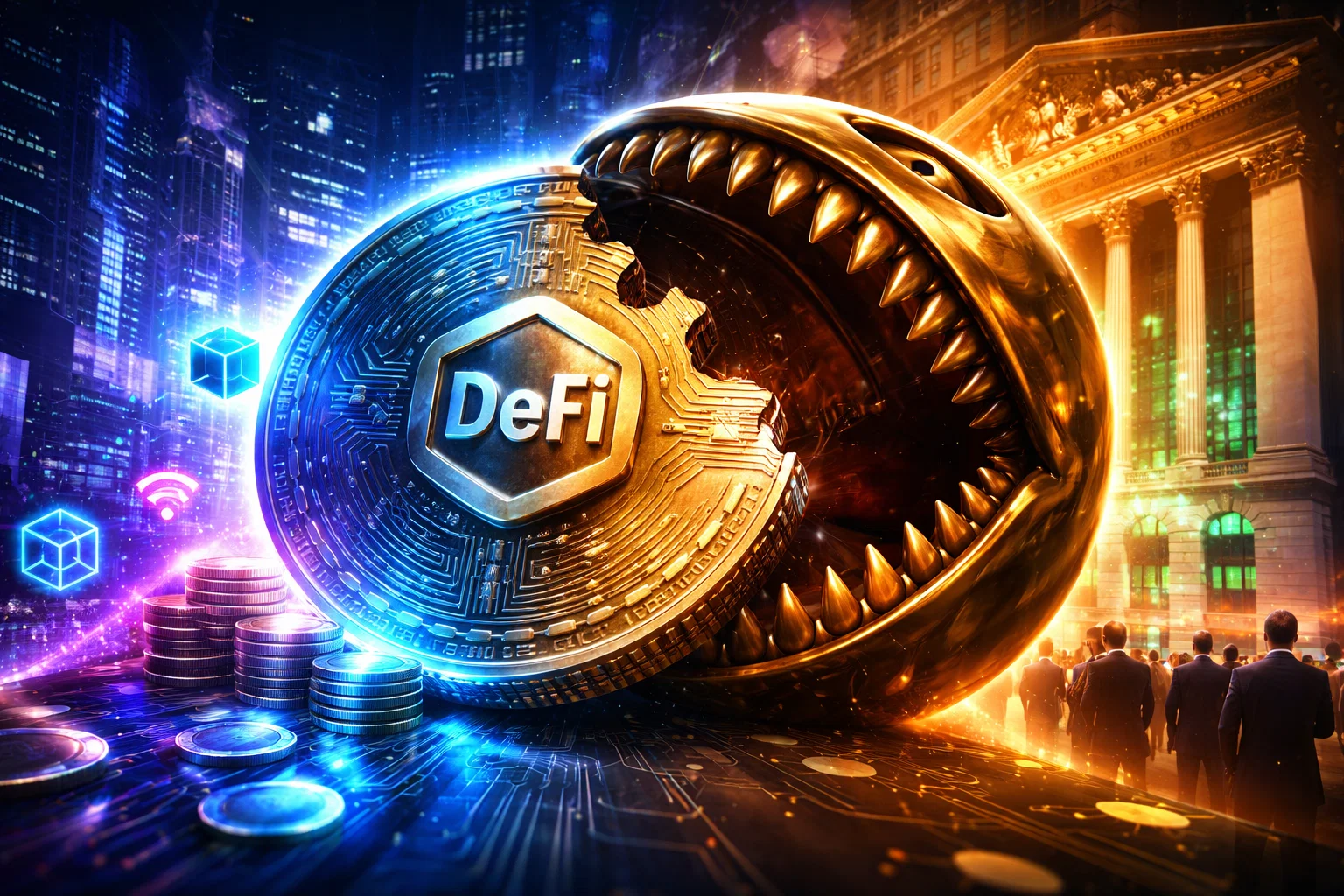
New DeFi Index Funds Hitting Mainstream Platforms
A) Wave of DeFi-Focused Funds
Funds designed for providing exposure to the DeFi sector through regulated platforms are now being released by an increasing number of investment firms and index providers. Investors can more easily have wide access to decentralized-finance tokens without buying each token separately due to these DeFi index products and ETFs.
B) Common Fund Structures
These funds often follow one of many models,
- Physically-backed baskets: keeping the real tokens safe.
- Futures-based or synthetic exposure: Using derivative contracts tied to token values rather than directly owning the tokens is known as futures-based or synthetic exposures.
There are different levels of risk, expense and administrative complexity associated with each structure.
C) Major Players in the Space
A DeFi index ETF supported by a number of DeFi coins was released by Hashdex in 2022.
Galaxy Digital and Bloomberg came together to launch a DeFi index fund in August 2021. These indicate a stay away from standard bitcoin funds and toward more widely used, approved financial products.
Important Note: Verify the launch date, exact fund names, and AUM (assets under management) before publishing.
D) Impact on Liquidity, AUM, and Token Behavior
Several changes can happen when DeFi tokens get integrated into a mainstream fund,
- Liquidity improves: Increased trading volume and simpler entry/exit for big investors.
- AUM flows: Institutions may purchase more tokens and have an impact on market pricing by allocating through ETFs.
- Price action changes: Rather than just on-chain user growth, token prices may react to fund-related announcements, rebalances, or index contributions.
For example, adding tokens like UNI or AAVE to a fund basket could lead to buying pressure. Holders of underlying tokens should keep an eye on how supply and demand are impacted by fund creation or redemption.
These new index funds are filling the gap by allowing ordinary investors to access DeFi through their stock brokers, but they also change the way DeFi tokens behave in the market.

Key Tokens Included and Why?
DeFi ETFs are typically funds that contain a collection of established tokens that represent different areas of the decentralized finance environment. AAVE, UNI, LDO, SNX, CRV, MKR, and COMP are some of the most popular examples of tokens, each of which has its own role in the overall DeFi ecosystem.
AAVE: The native coin of the Aave protocol is used for decentralized lending and borrowing. This is important because Aave allows users to borrow or earn interest on crypto assets without the need for middlemen.
UNI: One of the biggest decentralized exchanges (DEXs), Uniswap, has governance token. It is necessary because it supports DeFi’s liquidity foundation and allows smooth, peer-to-peer token exchanges.
LDO: The Lido DAO token allows Ethereum and other proof-of-stake assets to be liquidly staked. It allows users to preserve the liquidity of their assets while earning staking rewards.
SNX: DeFi’s financial products are expanded with the token for Synthetix, a derivatives platform that allows trading of synthetic assets that mirror real-world stocks, currencies, and commodities.
CRV: Connected to the stablecoin trading system Curve Finance. It allows steady liquidity pools, which are necessary for low-slippage trade and DeFi stability.
MKR: The DAI stablecoin mechanism is maintained by MakerDAO’s governance token. It is essential to DeFi’s decentralized monetary stability.
COMP: The governance token for Compound, another leader in decentralized borrowing and lending, is prized for its huge user base and solid reputation.
Liquidity, market capitalization, on-chain activity, and governance involvement are typical selection factors for ETFs.
Note: ETF investors get exposure to the price fluctuations of these tokens, but they do not always have direct control over governance because fund managers typically maintain voting rights.
TradFi’s Entry into DeFi: Blessing or Threat
A heated debate has arisen when traditional financing (TradFi) entered the DeFi market. While some consider it a huge benefit, others worry that it could damage DeFi’s fundamental values.
- The Blessing Side
The arrival of TradFi offers decentralized finance new funding, liquidity, and credibility. DeFi projects become more stable and visible in mainstream markets as more institutional funding comes in.
In addition to offering resources for long-term growth and innovation, this may reduce volatility. In this case, DeFi tokens may expand and gain the trust of wider investors in the same way that institutional investors made Bitcoin and Ethereum more reliable assets.
- The Threat Side
However, there may be disadvantages to this traditional financial inflow. Large asset managers and funds may centralize ownership and reduce community control when they purchase DeFi exposure through ETFs. Tokens are managed by custodians on behalf of investors rather than being held directly by users.
The “decentralized” aspect of decentralized finance is weakened by this arrangement. Additionally, institutional investors frequently give preference to short-term gains, which may shift token pricing and project choices away from community-driven objectives.
- Custody and Market Power
ETFs usually use centralized custody schemes, in which the tokens are held by a regulated organization. This limits the tokens’ ability to contribute to on-chain activities by preventing them from taking part in staking, liquidity providing, or governance voting.
In addition, even in the absence of a specific aim, big asset managers with large token supply may indirectly affect market pricing or governance results.
- A Balancing Act
Without question, TradFi’s involvement has increased the popularity of Ethereum and Bitcoin, but it has also brought them closer to traditional market cycles. The same dual effect, increased expansion and visibility, but also a higher reliance on centralized financial players, may be experienced by DeFi.

Retail Access vs Decentralization Values
The arrival of DeFi ETFs draws attention to a major dispute in the cryptocurrency space: decentralization vs accessibility. Through well-known broker apps, these ETFs make it simpler and safer for average investors to become exposed to DeFi tokens.
Investing in decentralized finance only requires a few clicks and doesn’t require wallets, private keys, or gas costs. Yet the convenience of use comes at a price, a departure from DeFi’s self-custody principles and a loss of control.
- Convenience vs Control
Compared to managing a cryptocurrency wallet, most retail investors find working with a broker app to be easier and less stressful. Yet, users lose direct ownership when they hold ETF shares rather than tokens.
They are unable to engage with DeFi protocols, move assets on-chain, or stake them. Instead of influencing the ecosystem, their experience becomes passive as they observe price changes.
- Cultural and Governance Gaps
A culture of involvement, openness, and shared governance was developed by early DeFi users. ETF investors, on the other hand, are unable to vote on proposals or participate in protocol choices. By replacing passive holders with active builders and voters, this change may weaken DeFi’s community-driven character.
- Searching for Middle Ground
Tokenized ETF ideas, where on-chain representations could pass voting rights or fit with DAO governance, are being investigated by innovators. To maintain the community goal, some asset managers even talk of voting in accordance with DAO results.
- A Simple Difference
Consider Alex, an early DeFi user who takes a vote on Aave’s governance ideas, vs Emma, a retail investor who purchases a DeFi ETF through her broker. While they both see potential in DeFi, only one actually contributes to its future.
Market Implications and Trading Behavior
The way DeFi tokens are traded on the market might change if DeFi ETFs are approved. Large and consistent order volumes from institutions and individual investors are brought in when ETFs are listed on major exchanges.
ETF shares are built or divided according to the underlying tokens throughout the creation and redemption process, which opens up new possibilities for arbitrage. In along to providing additional levels of trading activity, this keeps ETF prices near the true worth of the tokens.
- Shifting Price Dynamics
DeFi tokens might start to behave more like traditional assets once ETFs are in place. Token values may increase in association with equities or riskier assets as institutional investors consider DeFi exposure as a part of their larger portfolios. This also suggests that DeFi prices may be more affected by fluctuations in interest rates, macroeconomic developments or equity selloffs.
- Short-Term Volatility Triggers
When new ETF listings are announced, traders may rush to purchase the fund’s tokens, which can lead to price surges. In a similar vein, ETF rebalancing events, in which the fund adjusts its holdings, may result in sudden buy or sell pressure.
- Key Watchpoints for Traders
Investors should keep an eye on price spreads, volume spikes and whether an ETF is trading above or below its net asset value (NAV). These signals often show how mood and liquidity patterns are changing in both traditional and crypto markets.
Risks, Red Flags, and What Retail Investors Should Know
While DeFi ETFs improve investing, they also introduce new risks that new investors should be aware of before investing. Custody risk is of major importance because the tokens are kept by centralized custodians rather than in personal wallets.
Investors may suffer losses if the custodian experiences technological difficulties, hacking, or poor management. Also, there is a concentration risk, which might increase fluctuation if a small number of large funds own major portions of the same tokens.
Opaque index rules are a further concern. Investors may be left wondering about changes in holdings since some ETFs may not provide a clear explanation of how they choose or rebalance tokens. Another warning sign is regulatory changes; DeFi assets are subject to changing international regulations that may have an impact on fund operations or listings.
Following a simple safety checklist before investing,
- Carefully read the prospectus for the ETF.
- Identify who is in charge of the assets.
- Analyze the fee schedule and index mechanism.
- Find out about the tax implications in your home country.
If you have already bought a DeFi ETF, keep an eye on the NAV, set reasonable objectives, and avoid using it as a means of making rapid money. The most secure plan of action is still to invest slowly and intelligently.
Conclusion
DeFi ETFs are an important move in the direction of wide crypto adoption. They have trade-offs, but enhance investing. Before choosing to participate, investors must evaluate convenience against decentralization.