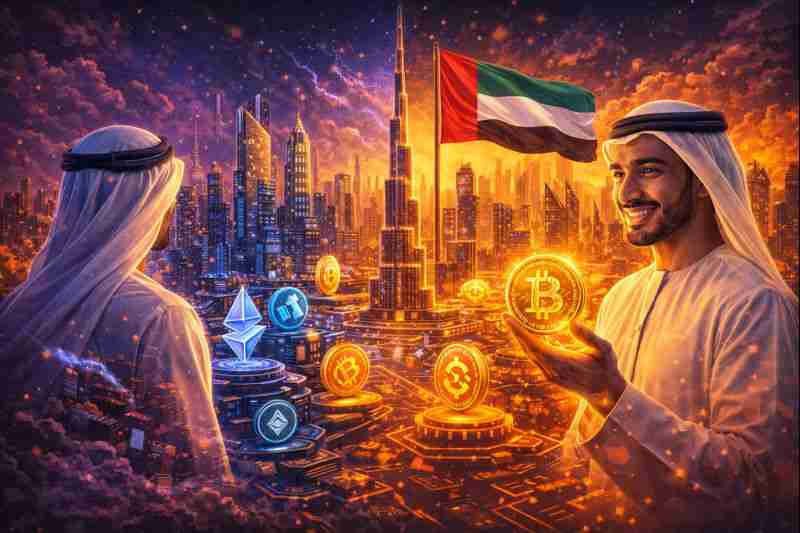
Since there are transparent regulations in a rapidly expanding ecosystem, the UAE is becoming the new crypto hub of the world. Dubai and Abu Dhabi are currently drawing the best exchanges, Web3 startups, blockchain developers, investors, and creators anywhere around the world.
Most people view the country as one where innovation can be supported rather than limited — from friendly regulation to the infrastructure that runs the network —
Crypto-friendly laws, adoption growth, headquarters shifts by companies worldwide, and large Web3 conferences are all contributing to this rise — headlined by Dubai events like the HODL summit — Venture capital firms, influencers, and constructors are making a base and creating a strong community that was not present several years back — drawn to gatherings like Crypto Expo Dubai —
The largest debate at this point is straightforward – will the UAE be able to continue to grow and, at the same time, keep the investors safe and fully compliant?
The transformation is taking place rapidly, and the momentum is real. Let’s discover why the UAE is turning out to be the new home of crypto.
Dubai & Abu Dhabi’s Latest Crypto-Friendly Laws
The UAE is not guessing and delaying, and it is one of the largest reasons why the country is becoming a crypto hub. Since then, Dubai and Abu Dhabi have established laws for crypto firms. These regulations indicate who is allowed to operate, how licensing works, and what companies have to do to balance compliance as well as safety.
Dubai has created a body known as the Virtual Assets Regulatory Authority (VARA). It establishes simple and structured regulations of exchanges, platforms, and digital asset services.
Through the ADGM structure, the Abu Dhabi regulatory provision also provides strong advice on crypto regulations, banking access, and reporting requirements. Together, the most recent crypto-friendly laws in Dubai and Abu Dhabi are helping to increase the possibility that international companies will find a secure location to conduct business.
A) Two Regulatory Centers: How the System Works
The feature of the UAE is its dual system of regulation.
- Federal level: Covers national regulations and AML/KYC requirements.
- Free zones: Special areas such as ADGM, DMCC, and DIFC, which provide licenses to crypto firms and enable them to operate with clear frameworks.
This system provides businesses with a choice. A startup testing an idea may prefer a free zone license, while a larger exchange may use a federal route for wider coverage.
Such flexibility makes the UAE faster and simpler to navigate as compared to other countries, where the crypto laws remain unclear or under discussion.
B) What These Rules Mean for Businesses
Real benefits are now realized in the companies due to clear licensing and structure.
- Direct license of exchanges, token projects, brokers, custody firms, and service providers
- Sandbox approval, which allows startups may test before they are fully approved.
- Free zones with business-friendly taxation
- The availability of loans is improved due to confidence in the regulations for banks.
- Easy to understand expectations, which reduces uncertainty and lawsuits
With predictable and simple rules, businesses would feel safe to invest and set up headquarters on a long-term basis.
This clear rulebook reduces company risk. By having the ability to view the rules, companies will feel more secure in terms of having HQs or setting up regional offices in the UAE. Recent approvals and license relocations indicate that firms are operating on that assurance.
In short, what provides the recent crypto-friendly legislation, introduced in Dubai and Abu Dhabi, more than an indication of interest, is that they create actual avenues through which firms, investors, and developers can grow in a familiar jurisdiction.

Built-for-Crypto Infrastructure – Finance, Tech, and Talent
The UAE’s modern infrastructure is one of its greatest advantages. Not only did the country welcome crypto businesses, but it also developed a framework that helps them. The UAE has created a setting where Web3 and cryptocurrency firms can expand confidently, from offices to payments.
A) Physical and Digital Infrastructure
In Dubai and Abu Dhabi, there is an expanding network of co-working spaces, accelerator centers, and startup districts for blockchain teams and fintech companies. These spaces provide founders access to high speed internet, networking opportunities, meeting spaces, and investor connections.
UAE is also boosting its digital infrastructure with new data centers, modern cloud services, and blockchain compatible hosting. Blockchain application cases in supply chains, identity systems, and public services are being tested by the government.
Also, the country is researching real-time digital payment systems and CBDC (Central Bank Digital Currency) trials. These steps shows the UAE is also thinking about the role of digital currency in the future economy along with to welcoming crypto.
B) Banking and Payment Access
Crypto businesses all around the world have had difficulty securing simple bank accounts for years. That is no longer the case in the United Arab Emirates. Banks are now confident enough to collaborate with authorized crypto companies due to clear laws.
Many startups nowadays are able to;
- Create business accounts
- Make use of authorized payment gateways.
- Raise investment capital
- Pay merchants and workers.
One of the largest barriers in the international cryptocurrency sector has been removed by this access.
C) Talent Pipeline and Workforce
Developers, compliance teams, legal counsel, marketing teams, and product specialists are all necessary for cryptobusinesses. Top talent from all over the world is attracted to the UAE because of its excellent standard of living, simple residence procedures, and startup visas.
The workforce now consists of,
- Fintech-trained local professionals
- Blockchain developers and expatengineers
- Experts in compliance and risk from international financial centers
- This creates a pool of skilled and well-rounded talent.
D) A Strategic Global Location
The time zone of Dubai is situated between the Middle East, Europe, and Asia. As a result, there are no major delays while working with teams from the USA at night, Asia in the morning and Europe during the day.
Global Projects Moving HQs and Licenses to the UAE
“Global projects moving HQs and licenses there” is increasingly an ongoing pattern rather than only a headline.
Several well-known crypto exchanges, blockchain layer-1 initiatives, NFT markets, and custody service providers have started licensed operations or moved their headquarters to Dubai and Abu Dhabi in recent years. A steady wave came about from what began with a small number of early adopters.
A) Why Companies Are Relocating?
The main motivation is regulatory clarity. Understanding the rules allows companies to plan ahead, make confident personal decisions, and create long term products without having to worry about unexpected legal changes or limitations. The UAE provides that stability.
Other reasons include,
- Market access: The Gulf area has a high level of investment activity and an increasing number of crypto users.
- Banking support: Licensed businesses are free to create accounts and conduct lawful business.
- Easy visa and company setup: Work and residency visas are quick and convenient for businesses.
- Wealthy investor ecosystem: In the UAE, Web3 startups and digital assets are being rapidly invested in by venture capital firms as well as family offices.
- Networking: In other financial centers, it is rare for founders to have face to face meetings with partners, investors, and regulators.
B) What a Company Gains By Moving
A relocation project to the UAE is normally beneficial to,
- A legal license to operate
- Availability of investors and venture capital.
- Presence and support of the community, attendance at events.
- Local working relationships with banks, compliance firms, and advisors.
- Good reputation and credibility in the international market.
The UAE is not only gaining favor with companies it is proving to be the location where serious crypto businesses prefer to scale.
Events, Web3 VCs, and Influencers Flooding In
The UAE is become a major hub for the global Web3 community. From major conferences to special investor dinners, the country hosts events that attract entrepreneurs, developers, investors, inventors, and business leaders from around the globe.
A) A Growing Calendar of Crypto and Web3 Events
Major blockchain summits, crypto expos, developer hackathons, and Web3 networking gatherings are held annually in the UAE. There is more to the gatherings of startups, exchanges, regulators, lawyers, financial institutions, and influencers than just marketing possibilities.
Accelerator programs, training workshops, and startup demo days are becoming more and more popular. These provide early stage teams a chance to interact with investors, showcase their work, and receive mentorship.
B) The Rise of Web3 Venture Capital and Angel Investors
In order to be near to deal flow, venture capital firms are currently setting up offices in the United Arab Emirates. The area is seen by many VCs as having a lot of potential concepts and rapid growth.
Their function is important since they offer,
- Financing for Web3 and crypto startups
- Support for token investments
- Guidance and mentoring
- Programs for incubators and accelerators
Founders don’t have to spend months looking for investment when finance is readily available.
C) Influencers and Community Builders
Digital innovators and crypto influencers are also moving to the UAE. They are a source of energy, attention, and trust. Through social proof, online content, and in-person community building, they support the expansion of projects.
D) Deal Flow and Talent on the Move
Above all, these interactions and events lead to partnerships, collaborations, funding, hiring, and product launches. Additionally, they help companies in hiring personnel more quickly than in many other areas.
As a result, there is a dynamic environment where possibilities arise instantly and ideas circulate rapidly.

Can UAE Maintain Both Growth and Compliance?
The UAE is driving rapidly, and welcoming builders, exchanges, and Web3 businesses, and this comes with quick expansion comes responsibility. Encouraging innovation and having sound regulations that prevent harm to consumers, unlawful conduct, and loss of confidence are challenges.
A) Balancing Innovation and Safety
The field of crypto is rapidly evolving. Financial products, platforms, and tokens appear quickly. Governments must simultaneously protect investors, fight fraud, enforce international sanctions laws, and prevent money laundering.
The UAE realizes this equilibrium. Rather than pause the progress, the country designed a system that would provide room to experiment but maintain a check on it.
B) Tools That Help Maintain Control
The UAE applies multiple important strategies that ensure security and growth,
- Tiered licensing: Companies are granted licenses based on their size, type of business, and percentage of risk.
- Sandbox programs: New projects can test ideas under supervision before to going live.
- Strong KYC/AML rules: Teams must verify users and report any questionable activity, much like in traditional banking.
- Open communication: Regulators and businesses meet frequently to discuss gaps, revisions, and regulations.
This strategy motivates industrial growth while upholding financial stability and legal standards.
C) Challenges the UAE Must Watch
With good developments, there exist risks. Various free zones and federal structures should remain consistent and should not confuse each other. The country should also be in a position to have sufficient tools and qualified staff to implement the regulations in a fair and uniform manner. Another challenge is managing reputation, especially with the world watching how the UAE handles compliance.
D) A Path Forward
To policymakers, the goal is to continue developing transparent rules, increasing the capacity of enforcement, and being transparent. Companies must not avoid being responsible by ensuring they remain in compliance, investing in effective risk practices, and collaborating with regulators.
The UAE can continue to be a fast-growing crypto hub while maintaining its credibility, equity, and reputation worldwide with continued cooperation from both sides.
Future Scenarios: Best-case, Realistic, and Downside
Best-case: The UAE creates a balance between innovation and compliance, gaining the confidence of people worldwide and rising as the most populous crypto-hub. Projects gain access to capital, credibility, and long-term stability.
Realistic: Growth proceeds, but with periodical tightening of regulations. The companies have to adjust to audits and new rules, while investors are still confident and cautious.
Downside: Licensing is slowed down by compliance gaps or international pressure, and it discourages innovation. Expenses increase, money becomes selective, and momentum slows.
Every situation impacts investor trust, business policies, and the long-term sustainability of the UAE in the world of digital assets.
Conclusion
Due to clear regulations, strong support, and a high level of the UAE has grown as a major hub for Web3 and crypto. Founders should consider licensing possibilities, investors should build local networks, and regulators need to find a balance between growth and safety.