The Web3 gaming sector experienced remarkable growth during the last few years which established a player base in the millions worldwide.
The digital world success of “Hamster Kombat” has produced wide user engagement due to its fresh gameplay mechanics for in-game earning opportunities. Their growing success has activated significant negative attention toward these games.
These games face criticism because of their environmental impact which stems from their heavy energy usage.
Web3 games create anxieties among some audiences who believe their feedback may cause political decisions and create social disturbances.
People are questioning whether these games can continue beyond their current sustainability thresholds without damaging natural ecosystems or human societies.
Let’s explore the positive features of Web3 gaming while discovering the concerns of critics regarding these systems.
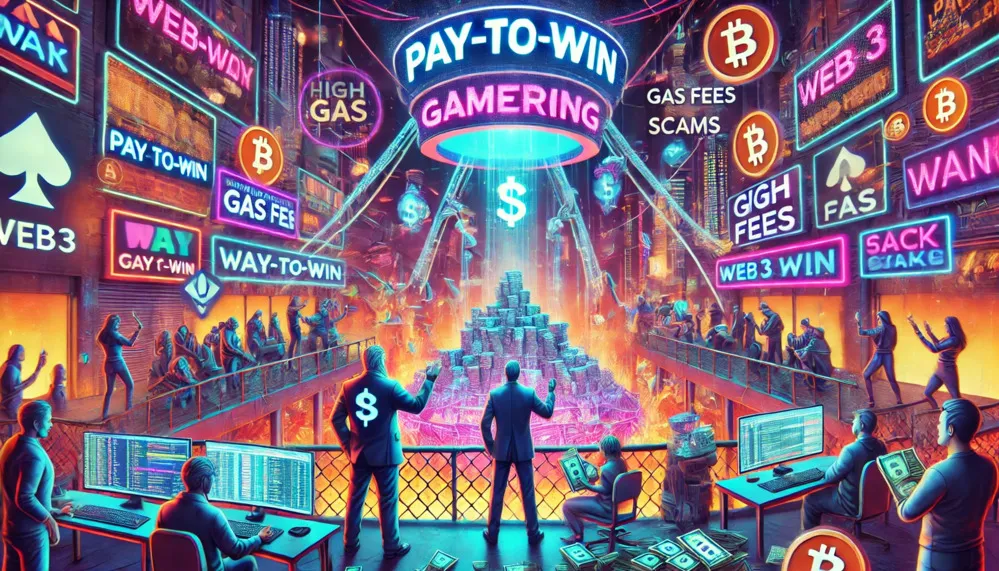
Controversies Surrounding Web3 Gaming
What is Web3 Gaming?
Web3 gaming delivers a fresh gaming experience through blockchain technology and NFT (non-fungible token) ownership to empower players with complete control of their virtual game assets.
All transaction information securely exists in digital ledgers known as blockchains which function like electronic record books that operators can’t modify.
The blockchain infrastructure of Web3 games allows players to own NFTs of digital assets including skins, characters, and game world components.
The unique nature of these NFTs ensures that every token is distinct while players actively purchase and transfer assets through trades with other players.
Through blockchain technology gamers achieve full ownership of their in-game assets while traditional games maintain developer control over player items.
Decentralized Economies and Governance
The decentralized gaming economies represent a primary component of Web3 gaming infrastructure. The economies that power these games exist outside the control of individual companies.
Players in Web3 games influence the power to direct system operations by establishing prices and contributing to feature development decisions.
Through decentralized governance, players can make important decisions by using tokens which allows them to shape the game.
Web3 gaming grants players additional control over both game operations and its direction.
Players in Web3 games get genuine ownership rights along with complete control to influence and direct the development of their gaming universe.
Success Stories of Web3 Games
A) Hamster Kombat – A Popular Example
The Web3 game Hamster Kombat has become a global success by gaining millions of player bases worldwide.
The game permits users to grab exclusive hamster characters for battles through NFT blockchain verification which ensures each hamster holds one-of-a-kind status.
Through gameplay activities, players can earn digital currency inside the game to later trade or sell for monetary value.
With its success, Hamster Kombat proves Web3 gaming’s capacity to develop amazing player experiences that give players both entertainment value and financial benefits.
Hamster Kombat blockchain shows how it transforms traditional game principles by granting players full ownership of their virtual game assets.
B) Economic Benefits of Web3 Gaming
Web3 gaming implements economic features that traditional games fail to provide.
Through gameplay activity, players can generate revenue by obtaining NFTs and in-game currencies with real-world market value.
The ability to make money through Web3 gaming exists from buying and selling unique NFTs as well as trading game assets — models that are evolving from play-to-earn to challenge-and-earn. With this new framework, gamers can transform their gaming activities into an earning opportunity.
The decentralized method of Web3 games offers players control over game economies resulting in active player-driven markets with more economic power.
With the Web3 games developing countries can offer their players new opportunities to generate income beyond regular employment options.
C) Social Benefits of Web3 Gaming
Web3 gaming offers both economic benefits together with social advantages for its users.
Web3 games enable player interaction through decentralized communities — including gaming guilds — where individuals form teams while taking part in governance choices together.
Web3 let users become active participants in their game’s growth alongside being owners who contribute beyond mere consumption.
Participatory experiences generate extended community bonds while building gamer commitment to the game.
Blockchain technology provides players full control over their data while simultaneously creating a secure and private gaming environment.

Environmental Concerns – A Primary Controversy
A) Energy Consumption and Its Impact
Web3 gaming faces the biggest criticism due to blockchain technology that uses excessive energy — though newer zkEVM gaming infrastructure is making transactions cheaper and more efficient.
The majority of Web3 games operate on Ethereum blockchain systems that depend on traditional Proof of Work (PoW) transaction validation methods.
Proof of Work systems demands powerful computer systems to resolve complex mathematical computations while using significant amounts of electricity.
The carbon footprint of blockchain in gaming remains under concern because portions of its electrical needs come from non-renewable energy sources including coal and natural gas.
Experts suggest this amount of energy consumption leads to climate change and shows that blockchain gaming operates unsustainably over time.
- Research shows blockchain transactions on particular networks require energy consumption equivalent to how an ordinary household uses power for multiple days.
- Many millions of Web3 game users along with their frequent transactions result in a massive total environmental effect.
B) Criticism from Environmental Activists
Environmental activists together with organizations continue to address for resolve these energy concerns.
Activists claim the gaming industry faces sufficient criticism for hardware waste production that it cannot accept blockchain’s excessive energy requirements.
The growing number of players joining Web3 gaming platforms could lead to existing energy demands according to several experts who warn this will increase environmental impact.
Some players and developers fail to recognize the environmental impact of their blockchain-based gameplay according to criticism.
C) Counterpoints and Energy-Efficient Solutions
Supporters of Web3 gaming argue that the industry will use more energy-efficient technologies to address these concerns.
Proof of Stake (PoS) marks a significant blockchain validation method transition from Proof of Work because it uses less energy.
Web3 gaming’s dominant blockchain Ethereum achieved its Proof of Stake transition in 2022 which reduced energy usage by more than 99%.
The change received widespread praise because it represents a major step in blockchain sustainability.
- Several developers are selecting eco-friendly blockchain platforms like Solana and Tezos because these platforms operate with minimal energy requirements.
- Blockchain networks can be powered through renewable energy while carbon offset programs work to cancel out emissions from gaming operations.
D) Balancing Innovation and Sustainability
Environmental issues in Web3 gaming present challenges but developers along with players and blockchain companies can work together to find solutions.
Web3 sustainability progress depends on the joint efforts of developers with blockchain companies and their video game player communities.
The Web3 gaming industry can preserve the planet while growing through the adoption of efficient blockchain networks and investments in renewable power generation alongside broad educational efforts about environmentally friendly gaming techniques.
The future success of these games depends on finding an equilibrium between innovative features and environmental responsibility.
Influence on Political Processes and Society
A) Concerns About Political Influence
The revolution in Web3 gaming affects game-playing experiences yet simultaneously creates worries about its unrecognized political effects.
Players within Web3 games get tokens that serve as voting currency for decisions concerning game governance within their ecosystem.
The decentralized political structure, which many perceive empowering faces criticism that comparable systems could be misused to mold both ideological beliefs and physical reality events.
These Web3 gaming platforms featuring player populations risk becoming platforms for unintentional as well as intentional circulation of political content.
- Because Web3 games operate without centralized authority it becomes difficult to monitor both token distribution methods and voting procedures.
- Rich participants combined with powerful token holders potentially dominate governance structures through gaming mechanics which raises questions about fairness and provides rise to manipulation concerns.
- Some analysts express fear that dominance among participants will replicate existing social biases leading to the dismissal of Web3’s democratic foundational values.
B) The Debate Around Manipulation and Propaganda
The danger exists for Web3 games to serve as platforms that enable propaganda efforts and manipulative activities.
Web3 video games which gather mass audiences create potential spaces for biased content distribution.
Through advertisements and storylines within the game, developers can promote political agendas in ways that remain undetectable to players.
Game content might conceal intentional misinformation campaigns which represent another serious threat.
- Analyzing the influence of Web3 games becomes most hazardous for young players because they often lack an understanding of the underlying purposes behind messages.
- The interactive quality of Web3 games creates an opportunity for them to serve as influential tools that can shift perspectives between commercial business interests and political agendas.
- These platforms raise concerns among people who believe governments and corporations will exploit their reach to deliver undisclosed agendas to millions of users.
C) Defending Against Potential Misuse
The issues surrounding Web3 gaming can be resolved through improved transparency and regulatory measures according to its concerns.
Game developers can establish clear rules to define which platform content is permitted.
Web3 game development benefits from clear guidelines that block political statements and manipulative content from entering the gaming environment.
The governance structure of decentralized systems could be improved through specific voting system measures to prevent token-based wealth inequality and avoid vote domination by money players.
- Video game developers continue to investigate the potential of AI together with blockchain analysis tools to identify propaganda and manipulative actions that exist within their games.
- The detection tools assist in spotting irregular gameplay thereby protecting game fairness across all player levels.
D) Balancing Innovation with Responsibility
Through Web3 gaming we can construct worldwide social networks while generating innovative developments.
The impact of Web3 games on political and social systems remains significant.
Developers and players must actively work to reduce potential risks which will protect Web3 gaming’s status as an innovative platform for creative collaboration instead of allowing manipulation.
The evolution of this industry depends on transparency together with education and ethical practices to preserve trust among its users.
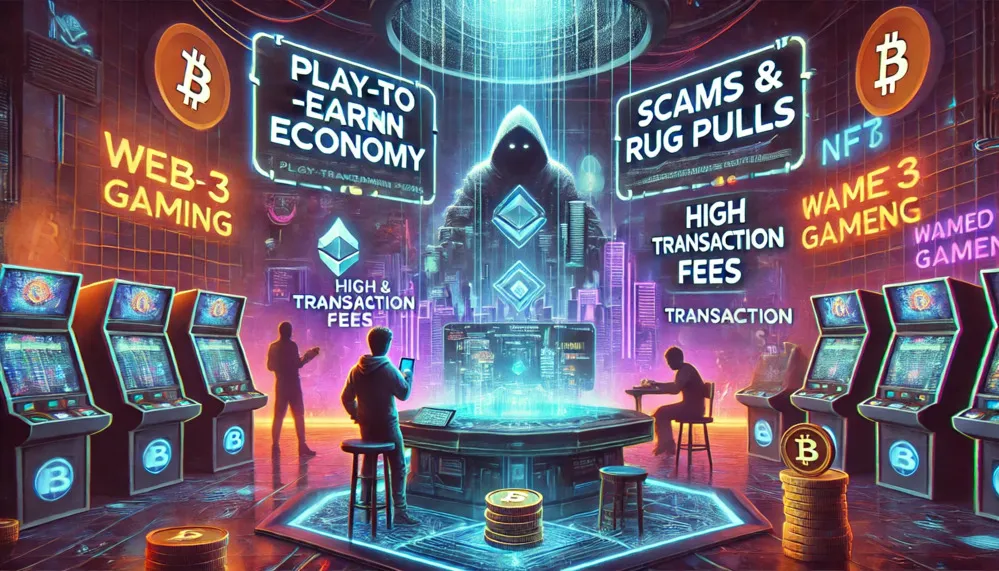
Governance Issues in Web3 Gaming
Challenges with Transparency and Accountability
The absence of clear visibility regarding important decision-making processes represents the main issue.
Web3 games implement transparent blockchain technology but their decision-making rules and processes remain unclear to their player base.
Some games maintain complex governance mechanisms which pose understand challenges to typical players since creating conditions for doubt and conflict.
- Accountability is another key concern. Under traditional gaming systems, the developer maintains full authority to make all game-related choices.
- Web3 games divide game management among decentralized participants who share decision-making authority in their ecosystem.
- The innovative approach brings challenges to deal with when issues occur.
- When accountability mechanisms stay unclear to users bad actors exploit the system to make choices that benefit exclusive interests.
Failures in Governance Models
Web3 games enable players to make key decisions through token-based voting mechanisms that let users get or purchase tokens.
A token system generates imbalances because players and groups who collect more tokens achieve superior voting authority.
Wealthy players together with outside entities use their financial assets to sway game decisions toward their own interests thus invalidating the democratic process in Web3 games.
- The process of governance by community members tends to move inefficiently through long periods.
- Multiple opinions create delays in achieving group consensus and therefore hinder needed game development improvements.
- When community members disagree it causes conflicts that result in intensified damage to both game development and its overall reputation.
Addressing Governance Challenges
To resolve these problems Web3 games must establish enhanced governance structures.
Web3 games need transparent decision-making structures together with voting limits and accountability mechanisms to prevent token-based dominance scenarios.
Web3 games succeed with long-term trust and success when they establish governance systems based on fairness and inclusivity which truly represent their player base.
Solutions for Sustainability and Governance
Adopting Eco-Friendly Blockchains
Web3 gaming sustainability efforts start with selecting blockchain technologies that reduce environmental impact.
Significant energy savings become achievable when blockchain systems migrate from energy-consuming Proof of Work (PoW) to the more energy-efficient Proof of Stake (PoS).
The transition of Ethereum from PoW to PoS demonstrates how blockchain gaming can achieve sustainability through energy reductions exceeding 99%.
The blockchains Solana, Polygon, and Tezos offer developers sustainable blockchain solutions because they prioritize energy conservation.
Integrating Renewable Energy Sources
Blockchain operations become more energy-efficient when renewable power sources are integrated as part of their infrastructure.
With the utilization of solar, wind, and hydroelectric power for blockchain network operations developers attain additional reductions in their games’ carbon emissions.
The implementation of carbon offset programs serves to make emissions neutral.
Gaming companies have two options to offset their platforms’ environmental impact; they can fund renewable energy projects or support reforestation initiatives.
Ensuring Transparency Through Smart Contracts
Web3 games require transparent methods for governance management to resolve existing challenges.
All rules and voting systems should maintain simplicity while maintaining maximum accessibility for the player base.
Through blockchain-based smart contracts developers can automatically enforce governance rules in a transparent manner.
Users develop stronger trust relations through this approach since manipulation attempts become minimized.
Creating Fair Voting Systems
Web3 gaming depends on community management as its core element for successful governance.
The implementation of voting systems with caps along with weighted mechanisms serves to protect fair representation against wealthy players.
Users receive one vote per token they own yet their voting influence decreases proportionally to their token accumulation protecting every player’s voice.
Encouraging Collaboration and Feedback
Web3 developers can establish moderation teams consisting of community members who serve both as conflict resolvers and major decision overseers.
Receiving regular updates combined with open feedback sessions will improve community trust along with mutual collaboration.
Web3 games create governance systems through attention to inclusivity and fairness which results in long-term success for everyone.
Balancing Innovation with Responsibility
Through Web3 gaming players gain ownership rights together with decentralized economies and NFT-based reward systems.
The progress in Web3 gaming systems results in ethical problems that affect environmental sustainability together with social equity concerns and governance standards.
Web3 gaming provides players with power but simultaneously generates boundaries that permit dominant groups to take advantage of the system.
Web3 development requires a balance between innovation through the use of eco-friendly blockchain technology alongside the establishment of overall governance mechanisms and transparent systems.
Clear ethical guidelines supported by accountability systems establish fairness and sustainability.
Web3 gaming will transform the industry through responsible practices that create a welcoming experience that benefits all participants.
Final note
The innovative features of Web3 gaming platforms face main obstacles from environmental impact to political control and unclear governance systems.
Sustainable development requires that these challenges must be properly addressed.
Through responsible innovation developers together with players can build an ethical gaming environment that promotes inclusivity.