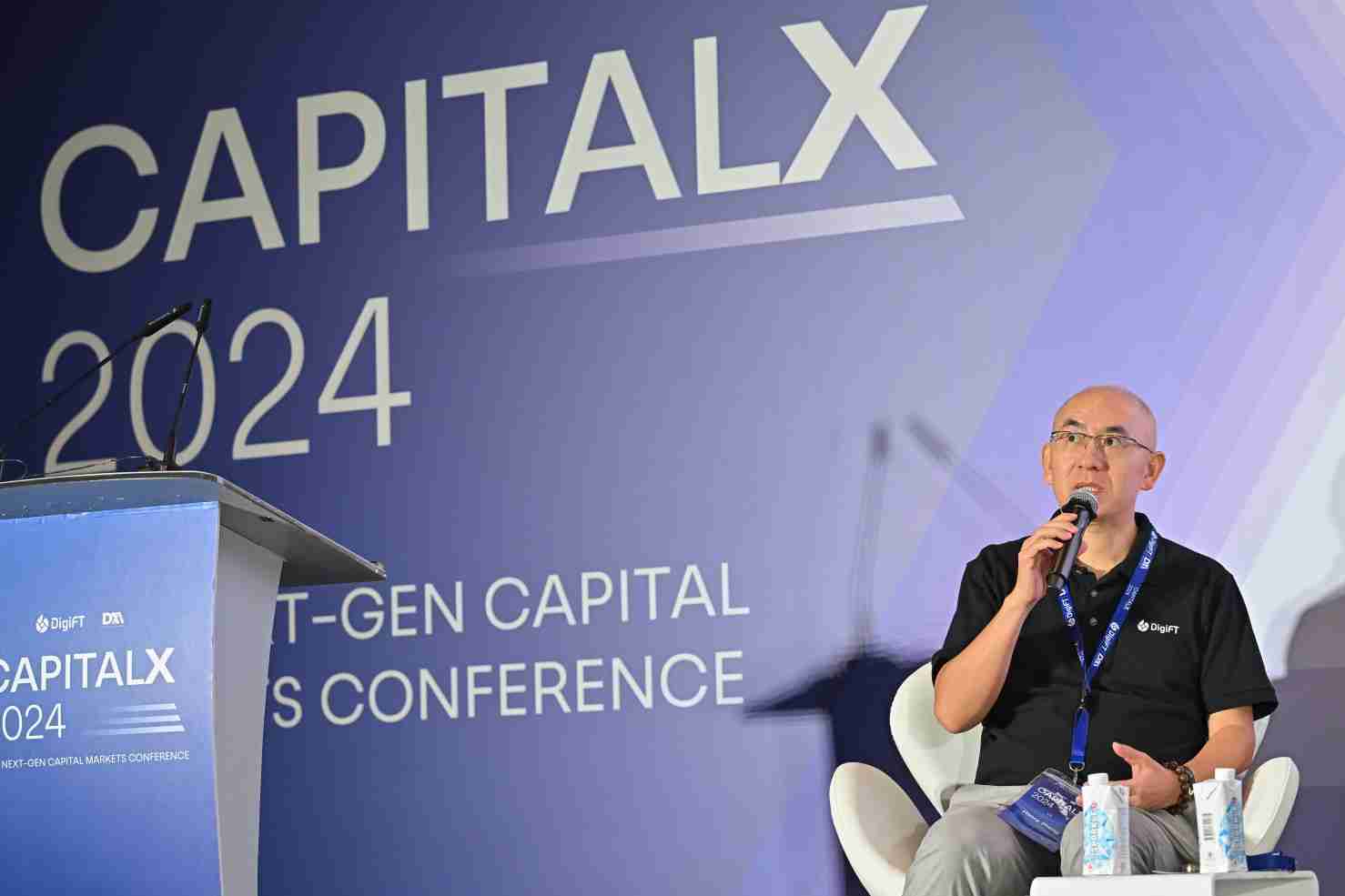
We have the privilege of interviewing Henry Zhang, CEO of DigiFT
A seasoned finance professional with a deep passion for technology, Henry has more than 20 years of experience in the global banking industry.
Some of his accolades include serving as Greater China CEO at East West Bank, Deputy China CEO at Standard Chartered Bank and Deputy China CEO at Citibank. During his stint in the banking industry, Henry built the first cross-border cash concentration system in the world and the first bilingual online banking system in China.
A strategic visionary with strong management capabilities, Henry has had great success in capturing emerging market opportunities in the past. As Founder and CEO of DigiFT, Henry works closely with the local regulatory bodies and Web3 community to grow the DeFi industry — part of Asia’s rise as a crypto hub.
1. Vision and Mission: What inspired you to create DigiFT, and what core mission drives your work?
Henry: Having witnessed the profound shifts in financial markets brought on by two waves of disruption – the rise of the internet and then the mobile revolution – I felt a deep conviction that blockchain technology would be the next transformative wave.
This technology has the power to reimagine every corner of the capital markets, making them more accessible, transparent, and efficient. DigiFT was born out of this vision: to build a bridge between traditional finance and Web3, bringing the full potential of digital assets to investors and institutions worldwide
At DigiFT, we aim to empower investors by bringing financial assets on-chain through tokenization — mirroring how big banks are embracing tokenization — advancing capital markets with blockchain technology. To start, by providing seamless, 24/7 secure access to highly liquid on-chain financial assets through a regulatory-compliant platform and decentralised technology, we empower investors with a superior way of low-cost access to high-quality financial instruments, setting a new standard in portfolio management, asset utility and risk allocation.
2. Product Offering: Could you explain how DigiFT’s solution uniquely merges the liquidity of crypto assets with the stability of traditional finance, such as U.S. Treasuries?
Henry: DigiFT has the capabilities to tokenize and distribute individual assets such as a specific U.S. Treasury Bond, as well as a diversified basket of assets such as funds like the UBS’s uMINT Money Market Token which is currently only available to accredited investors and institutional investors.
Unlike many competitors, DigiFT is an open platform, not limited to specific segments of the risk-return spectrum. We have the flexibility to tokenize, issue, and distribute across the entire range of fixed-income products: from U.S. Treasuries to High Yield and Emerging Market Debt, Structured Products, and related Asset-Backed Securities, including Private Assets such as Private Equity and Private Credit. Additionally, we hold a license to distribute Web3 fund products in tokenized formats, further expanding risk/return options for our clients.
By bringing TradFi assets like Money Market Funds and U.S. Treasuries on-chain, DigiFT provides continuous, on-chain liquidity for Web3 investors – offering the benefits of both traditional finance and Web3. Tokenizing these assets on-chain gives investors the speed, cost-efficiency, and flexibility typical of crypto-native trading, along with the reliability of traditional financial assets.
This approach opens up new, diversified investment opportunities for Web3 users, reduces costs for Web2 users, and provides asset issuers with a secure, compliant channel to bridge liquidity between traditional finance and crypto markets.
3. Regulatory Landscape: As regulation becomes increasingly prominent in the crypto space, how does DigiFT ensure compliance, and what role do you see regulators playing in the future of your platform?
Henry: DigiFT is regulated by the Monetary Authority of Singapore (“MAS”), holding a Capital Markets Services License and recognized by MAS as a Recognized Market Operator. We have a dedicated compliance team that is highly experienced and continuously updated on regulatory requirements, that is responsible for building and maintaining a robust compliance framework.
As the industry evolves, especially within the crypto space, regulators too are gaining experience, deepening their understanding of the space and continuously adapting. We partner closely with regulators and will continue to build on our partnership with them, particularly in maintaining regulations, ensuring consumer protection and supporting the growth of our platform.
4. Target Market: Who are DigiFT’s primary users, and what challenges or pain points do you address for them that other platforms might not?
Henry: Our target clients include accredited and institutional investors from stablecoin issuers, DAO treasuries, digital asset fund managers, and proprietary capital traders – typically users of institutional custodians and prime brokers who seek access to digital asset market trades.
While our primary users are accredited and institutional investors within the Web3 space, we focus especially on building partnerships with B2B organizations, including leading DeFi solution providers and ecosystem builders. By offering access to regulated financial assets, we empower these partners to confidently expand their offerings, adding security and compliance for their users.
In addition to supporting DeFi solution providers and ecosystem builders, we also assist Web3 treasurers and CFOs managing stablecoin reserves by providing them with rigorously vetted, bankruptcy-remote assets that not only maintain liquidity but also minimize risk exposure. Specifically for crypto traders, DigiFT allow them to mitigate crypto volatility and provide stable returns through providing access to a diversified portfolio of tokenized securities—ranging from single assets like T-bills to collective investment schemes, such as UBS’s uMINT.
Through our platform, we’re enabling investment options suited to various market conditions – offering robust ecosystem access to both risk-on and risk-off investment opportunities across the ecosystem.

5. Security and Transparency: How does DigiFT manage security risks, particularly in safeguarding user assets? How do you communicate transparency to build user trust?
Henry: As a regulated financial institution, DigiFT has established a robust security framework and controls that comply with regulatory requirements. We implement institution-grade security standards across all aspects of our systems—both on-chain and off-chain—to protect user information and digital assets. In addition to meeting regulatory mandates, we proactively identify and address potential security risks by conducting regular Vulnerability Assessment and Penetration Testing (VAPT) and technical risk assessments, especially when systems are updated. We also participate in a bug bounty program, drawing on external expertise within the industry to enhance our security measures.
Smart contract security is a key focus area for us. To ensure the highest standards, we engage top security partners to perform smart contract audits and provide ongoing security monitoring. As an exchange built on public blockchains, DigiFT uses externally owned account (EOA) wallets for self-custody, giving users full control of their digital assets and complete transparency over all transactions conducted on our platform.
6. Competitive Edge: The market is becoming saturated with crypto and DeFi platforms. What sets DigiFT apart from competitors, and how do you ensure you stay ahead?
Henry: We are the first Tier 1-regulated, smart contract-driven, on-chain exchange.
To illustrate this:
1) DigiFT is built on the Ethereum public blockchain, with a permissioned setup for the issuance of UBS’s uMINT token as a real-world asset.
2) DigiFT employs a non-custodial model which allows investors to choose their own custodians or self-custody. This flexibility enables us to integrate with wallets, custody providers, and various liquidity sources across the ecosystem, and scale horizontally by plugging into a variety of liquidity sources, wherever they may be.
3) DigiFT is authorized to accept USDC, digital assets and USD fiat. This is something many of our global competitors cannot do—enabling us to engage directly with investors on-chain in their preferred formats.
Operating under Tier 1 jurisdictional regulation and offering trusted, institution-grade products and services, DigiFT has built a solid foundation that instils confidence among top-tier institutions. We continuously explore new integrations with DeFi protocols and projects to expand our offerings. As blockchain technology evolves, DigiFT remains committed to advancing alongside it, pursuing new possibilities and use cases to meet the needs of our clients and the market.
7. Liquidity and User Adoption: Liquidity is crucial in digital asset markets. How does DigiFT attract liquidity to its platform, and what strategies do you use to grow user adoption?
Henry: At DigiFT, our approach to building liquidity and driving user adoption centres on accessibility, partnerships, and diversified use cases for tokenized assets.
- Direct and Indirect Distribution: We actively distribute the UBS uMINT token both directly to investors and indirectly through partnerships, allowing us to scale horizontally and provide liquidity access across multiple channels. Being non-custodial, we integrate with various wallets and custodians, enabling investors to self-custody or appoint their own custodians. This open structure lets us tap into a wide array of liquidity sources.
- Stablecoin Partnerships: We’re collaborating with stablecoin issuers who value the “Trust Anchor” our tokens provide. As a licensed Recognized Market Operator in Singapore, we can list stablecoins against tokens on DigiFT, giving these assets more utility beyond typical crypto use cases, such as meme coin and NFT trading, by enabling access to real-world income-generating assets.
- Ecosystem Collaborations: By working with custodians, exchanges, and prime brokers, we’re positioning uMINT as a high-quality, yield-bearing collateral option for institutional investors, with on-chain, real-time redemption available. This integration supports broader adoption by making uMINT suitable for margin collateral systems.
- Treasury Management for DAOs and Web3 Firms: The high liquidity and stability of uMINT make it an ideal choice for DAO treasury management and Web3 company treasuries, offering secure and yield-generating assets for corporate portfolios.
Through these multi-faceted strategies, we’re committed to enhancing market liquidity and fostering user adoption of tokenized assets in a secure, regulated environment.
8. Future Roadmap: What are some upcoming milestones or initiatives we can expect to see from DigiFT in the near future?
Henry: In our immediate pipeline are more partnerships and driving investor acceptance (detailed in answer to question 8). Our partnership strategies will focus around enhancing liquidity and accessibility across multiple dimensions particularly across distribution platforms, across native blockchains, and suitable regulatory jurisdictions.
9. Long-Term Outlook on Blockchain and TradFi Integration: How do you see the evolution of blockchain in traditional finance over the next 5-10 years, and what role do you envision DigiFT playing in that future?
Henry: In the next 5-10 years, we expect blockchain to profoundly reshape traditional finance, bringing new efficiencies, transparency, and global access. At DigiFT, we’re seeing a future where tokenization becomes a mainstream method for asset issuance, and this momentum is only accelerating – Ernst & Young estimates that the tokenization market will reach $28 trillion in the next six years.
We’re only at the beginning of where wider market adoption of tokenization is happening, and DigiFT is committed to leading this shift. We’re proud to be an authorized distribution partner of the UBS uMINT token, which we see as just the beginning of our institutional collaborations.
With the wider Digital Asset market, including Crypto and RWA, and market maturation, we’ll continue working with tech leaders, top-tier asset managers, and regulators globally to bring tokenized products to life.
We view collaboration with competitors as essential for growing market liquidity and promoting wider RWA adoption. With our smart contract-driven exchange, we have the flexibility to list diverse asset classes and provide liquidity where it’s needed, supporting a more interconnected, tokenized future for open finance.