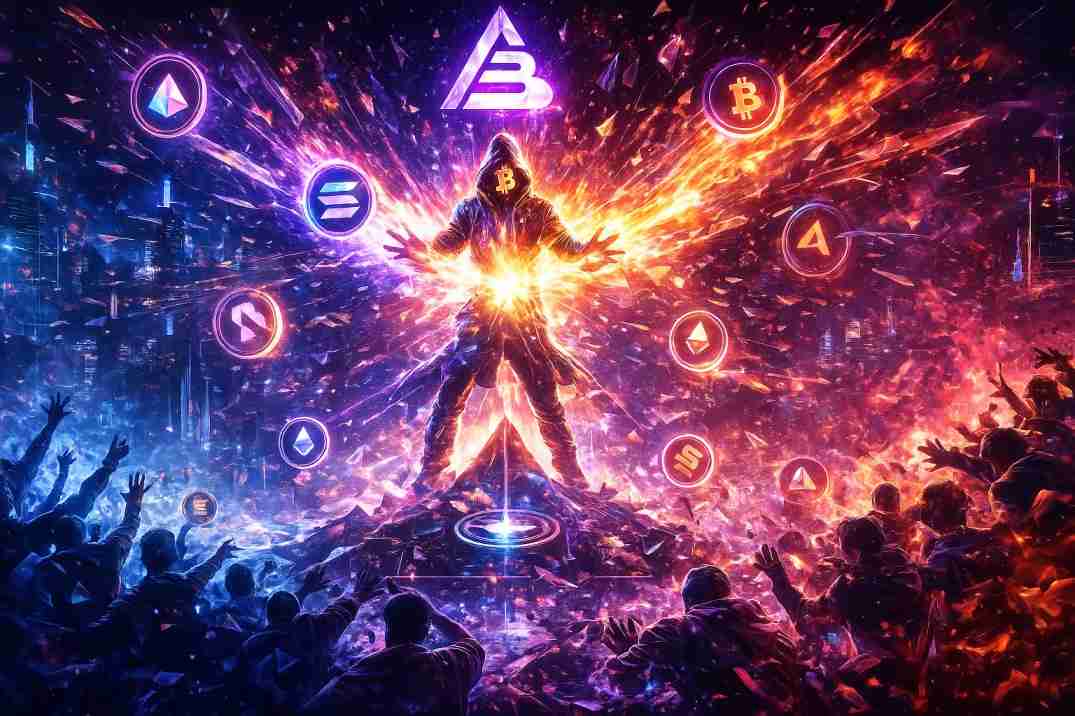
Waking up and opening your crypto wallet is something you imagine, and you get that you gained a significant balance overnight due to farming Blast.
You share some information with a friend, leave a screenshot, and shortly, a thread with cheering responses can be seen. Then you go down the line to discover other threads referring to Blast as a Ponzi and telling people to get out as soon as they can — a reminder of the ponzinomics risk in DeFi —
Blast is at the crossroads of slippery user experience, viral marketing, and unclear long-term economics — a contrast to more regulated on-ramps like DeFi ETFs — That is, it is wonderful in the short term, but raises real concerns in regard to sustainability.
Let’s discuss what Blast is, why the users are rushing to farm it, how the deposit-yield model functions, meme marketing, and whether the practice is a long-term innovation or a bubble.
What is Blast?
Blast is a crypto project based on blockchain that gained instant attention as it promised users an extremely high annual percentage yield (APY) on their crypto savings every year.
It was launched on a simple concept of rewarding people who locked their funds earlier, and developed a buzz with farming incentives — riding the same scaling wave as new Layer 2s and 3s —
Its token drop and public farming event, which guaranteed high returns to the first users, went viral on social media within a short time, and the site appeared as a trending name.
Why is everyone farming it?
The farming on Blast is supposed to be simple and rewarding to play, even on the first click. Users can deposit, typically Ethereum or stablecoins, into the smart contract of Blast and instantly start earning rewards.
The system monitored deposits and used tokens depending on the users’ contributions and duration of stay by users. The simpler the process, the more people join, and that is what happened to it in the initial period of its development.
The interface of Blast contributes greatly to this excitement. Wallet connection takes seconds with a one-click deposit option. It has a colorful, game-based dashboard with progress bars, ranking, and estimates of rewards.

The social sharing features allow users to share their farming outcomes online without any effort, and this further spreads the hype.
- The economics behind this are clear.
High APYs are attractive, and time-limited offers cause urgency. Users do not want to miss the next large yield, and it can be made to feel exclusive through claim windows or token lockups.
It is similar to getting free money, as one crypto forum user posted; only you have to deposit it and see your account fill up. That impression inspired a surge of action.
On-chain data indicates sharp spikes in transaction counts and wallet addresses interacting with the protocol during its early weeks, proving how fast the “Blast farming rush” took off.
Deposit-for-Yield Model and Controversies
Blast uses a simple deposit-for-yield model with users depositing their crypto to receive token rewards over time. On paper, this appears to be a fair trade; you provide liquidity, and in exchange, you get yield.
The concern that arises in most of these systems is the source of the yield. It can be sustainable in case real protocol revenue is converted to returns. But when a majority of the rewards come out of token inflation or new user deposits, the model would begin to look risky and even Ponzi-like.
A) The Source of Yield and Ongoing Debates
The origin of its yield is a major debate about Blast. According to the argument of some users, returns are being paid using new deposits and not actual protocol fees or products.
This raises the question of the duration of high APY. Others are also concerned about the safety of smart contracts, as un-audited or semi-audited contracts may leave the funds exposed to hacks.
B) Centralization and Legal Concerns
Another problem is centralization. When the team has control over major functionality, such as the ability to mint tokens, treasury wallets, or even the ability to administer the keys, the users are providing a small group of people with massive amounts of power.
That is a warning sign for a project that favors decentralization. Some legal experts have also expressed doubts that the structure of Blast can be similar to a security offering, particularly with a reward based on yield and intense marketing to retail investors.
C) Community Complaints and Team Response
The vague tokenomics, the lack of timely delivery of the promised updates, and the risk of a possible rug pull are all the complaints of the community.
Still, the Blast team has defended the project by sharing on-chain information and claiming that funds could be proven. Some independent analysts have also noted that there are other sources of revenue that seem to be legitimate.
D) Final Thoughts on Sustainability
At the end, the deposit-for-yield model can be effective provided it is transparent and supported by real economic value. Otherwise, the time of high returns can only last as long as the inflows decrease, which is a trend that has plenty of repetitions within the crypto world.

Meme-Heavy Marketing vs Real DeFi Innovation
High yields were not the sole cause of the growth of Blast, but the marketing was also a major factor. In the project, instant buzz was achieved through memes, viral X (Twitter) threads, influencer promotions, and gamified referral rewards.
The online users were advised to invite their friends, meme, and share their increasing balances. This interactive and social strategy made the project look like a movement instead of a regular DeFi platform.
- Why Memes Work in Crypto
Memes are effective because they reduce difficult concepts and spread quickly. They generate passion, a sense of friendship, and FOMO (fear of missing out). Even for those who were unfamiliar with the concept, Blast’s meme-filled advertising made participation seem attractive and lowered barriers for new members.
- Real DeFi Innovation vs Marketing Hype
Yet true DeFi innovation goes beyond viral advertising. Strong token utility, reliable yield sources, composable smart contracts, and open governance are all important. Critics argue that Blast prioritized appearance over long-term substance, with its popularity due to its design and simple usage.
- Learning from Past Patterns
The history of cryptocurrency reveals a number of initiatives that took off due to memes but failed when the rewards quit coming in. Strong principles cannot be replaced by hype alone.
- A Balanced View
Marketing is a tool, not a terrible thing in and of itself. Whether the viral publicity results in real DeFi growth or disappears as the excitement subsides will determine Blast’s level of success.
Is This Sustainable or Just Exit Liquidity?
- What Does “Exit Liquidity” Mean?
To put it simply, exit liquidity happens when new buyers enter the market, mainly to allow early investors to sell their tokens at higher prices. Late participants in these arrangements frequently wind up with tokens that value once the initial excitement subsides.
This idea is frequently used in projects where actual business value is less important to expansion than fresh deposits.
- When a Project Can Be Sustainable
If Blast focuses on actual, quantifiable revenue, it could be able to sustain its speed. As an example, the platform will survive market cycles if it creates strong use cases outside of farming or generates consistent fee income from legal on-chain operations. Token utility is also important; features that help balance supply and demand include burning tokens and locking them for governance.
A yield system can also be extended by gradually reducing rewards rather than suddenly. User confidence is maintained, and panic results are avoided with smooth modifications.
- When It Turns Into Exit Liquidity
Rewards that are only based on fresh deposits raise warning flags. The system may fail if token emissions increase more quickly than actual demand or if big holders and insiders begin selling early. These warning indicators have been present in previous DeFi bubbles.
- Reading the On-Chain Signs
Key indicators that users might monitor include significant token transfers to exchanges, an increase in whale wallet concentration, or sudden sell-offs after an airdrop. These frequently point to an approaching dump.
- Quick Sustainability Checklist
Verify whether a high-yield project generates actual revenue before committing to it.
- Are rewards verifiable and transparent?
- Are team wallets locked and accessible?
- Is the long-term utility clear?
If the majority of responses are “no,” it’s possibly not sustainable and is simply new liquidity for early sellers.

UX analysis: genius or Ponzi UX?
In cryptocurrency, user experience (UX) includes more than just slick graphics or eye-catching dashboards. Onboarding, defaults, friction, and the reward-discovery process all influence how people behave. This UX design may be equally important to Blast as its tokenomics.
- When UX feels genius
Blast makes DeFi accessible. Clear dashboards, automatic yield accruals, and a few clicks to deposit ETH remove the traditional difficulties that kept regular customers away. High engagement is influenced by social referral ladders, gamified progress markers, and a user interface that is easy to use. Crypto-curious users become active DeFi participants with this kind of UX.
- When UX feels like a Ponzi mechanic
Still, some trends are similar to growth-first, sustainability-later strategies. A loop of dopamine and FOMO is produced by default auto-staking, unclear yield sources, and frequent reward messages. There are no clear risk disclosures when terms like “earn” or “farm” are used. Referral pop-ups and leaderboards, which mimic traditional pyramid dynamics, gently encourage users to recruit others.
- Blast’s UX quirks
Sometimes, too much focus is placed on simplicity in its interface. One-click deposits and default auto-yield are examples of features that can make it difficult for users to understand where money is going or how returns are produced.
This polish encourages rapid expansion, but it also asks the question of whether Blast’s UX supports involvement or modifies behavior to maintain inflows.
To put it simply, Blast’s UX genius balances the boundary between product-led adoption and Ponzi-style design, as well as between accessibility and manipulation.

Risks, Red Flags, and How Users Can Protect Themselves
Opportunities and risks follow every DeFi boom. Blast is no different. Before jumping in, those who are eager to “farm the future” should take a moment to look for frequent red flags. An anonymous or unverified team, admin keys with complete control, excessive APYs, little technical documentation, or a token supply that is concentrated in a small number of wallets are all warning indicators.
Use a short research checklist to be safe,
- Analyze the tokenomics of the project carefully. How are awards financed?
- Look for reliable bug bounty programs and audits.
- Look for evaluation from other parties rather than just influencer posts.
- Keep an eye out for any unusual activity in the whale and team wallets.
- Before making larger commitments, always test the waters by making tiny withdrawals.
If you currently own Blast tokens, safeguard yourself by transferring money to secure self-custody wallets, using limit orders to prevent panic exits, and setting specific sell targets.
At last, keep in mind that historical yields do not guarantee future profits. Instead of following every new high-APY hype cycle, sustainable revenues come from projects with transparency, genuine utility, and long-term value.
Lessons for DeFi Builders and Regulators
Blast’s journey provides important lessons for DeFi builders. Rather than just token-driven excitement, concentrate on developing genuine, long-term revenue streams. To help users understand where rewards come from and keep tokenomics transparent.
Instead of pressuring customers to make deposits, provide user experiences (UX) that inform them about the risks and benefits. Reduce incentives gradually over time to build lasting trust and prevent unexpected token collapses.
Balance is the lesson for regulators. Keep an eye out for red flags such as retail-targeted promotions, unclear disclosures, and unverified yields. A risk labeling and uncomplicated consumer protection are essential, but so making sure that too much regulation doesn’t discourage innovation.
Overall, authorities should prioritize guidance rather than punishment, while builders should aim for clarity and integrity. When they work together, they can create an innovative and secure DeFi environment for users all around the world.
Final Note
Blast’s rise proves how effective UX and viral growth strategies may attract huge attention, but genuine use, transparency, and sustainable revenue are what make DeFi really long-lasting. Before relying on hype-driven yields or investing their hard-earned money, users should remain curious but careful and constantly verify on-chain data.